Products UQDB Blind-Mate Sets UQ04 Hand-Push Sets Rack Manifolds CDU & Custom Manifolds Capabilities Industries Quality About FAQ Blog Contact Get a Quote
Capabilities · Precision Machining

Precision CNC machining to ±0.01 mm.

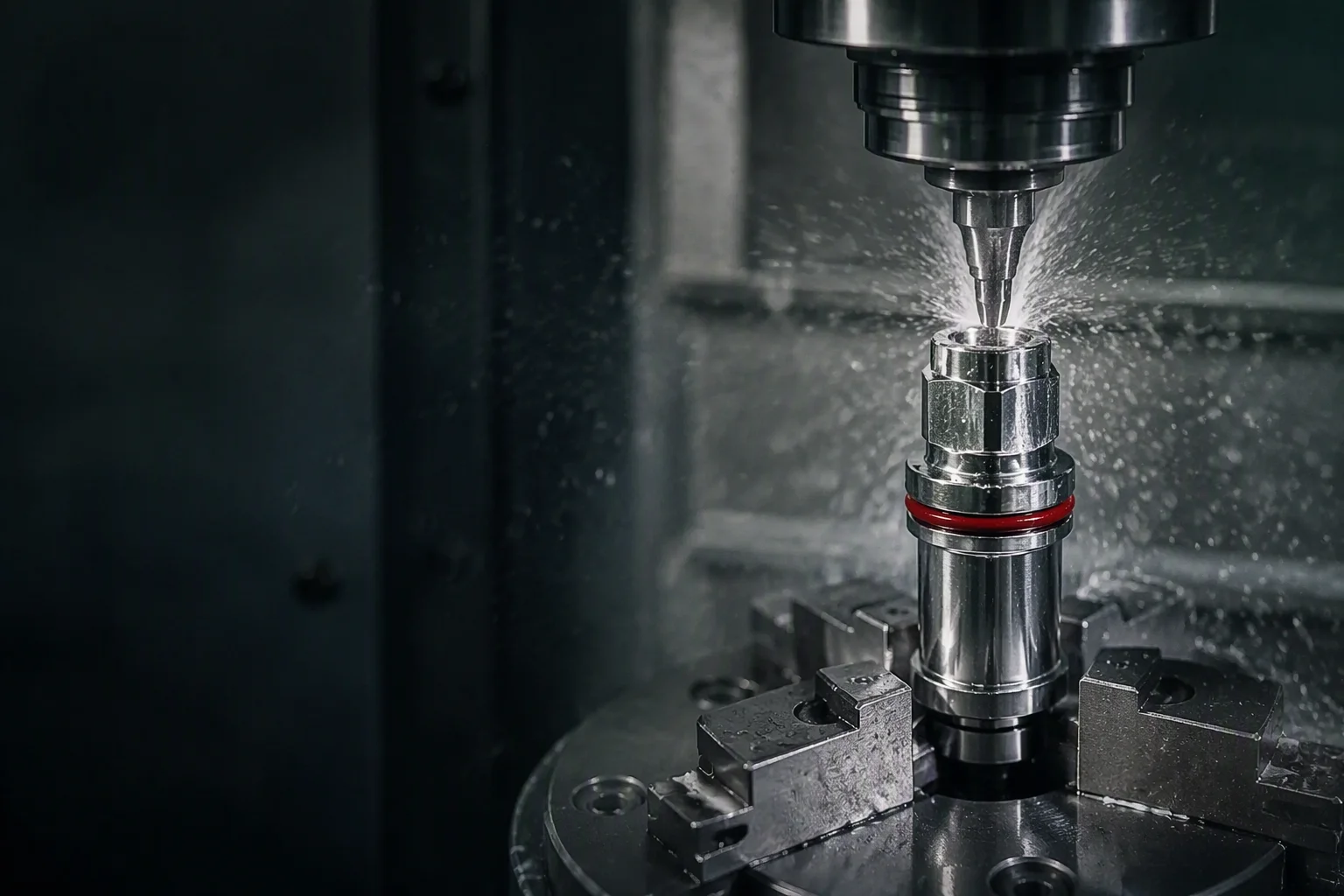
Valve bodies, manifold cores and blind-mate shells machined in-house on 3-, 4- and 5-axis centers — sealing faces ground to a ±0.01 mm tolerance and bores held from DN03 to DN10, in 316L stainless, brass or aluminum.

CNC machining center cutting a UQD coupling valve body from stainless bar stock
Machining

Sealing is a machining problem before it is a seal problem.

A dry-break coupling seals at two metal valve seats and one elastomer ring. If seat geometry drifts, no compound rescues the leak — so DryLink seats are ground, not turned, to a ±0.01 mm tolerance, and ball-contact hardness is held at the 24 HRC minimum the OCP UQD specification sets for the sealing interface.

  • ±0.01 mm — grinding tolerance on every valve-seat face
  • 24 HRC — minimum ball-contact hardness per OCP UQD Rev 1.0
  • 44.45 mm — 1U pitch envelope held on board-level hardware

Bore accuracy is flow accuracy. The dash-04 class needs a 7.14 mm minimum orifice to deliver its 0.80 Cv and 1.7 GPM rating — machining that drifts a few hundredths of a millimetre taxes every litre the loop moves.

Equipment & Process Window

What the cells hold, dimension by dimension.

The numbers below are the ones incoming inspection at your end can check first — bring a CMM and a gauge set and audit any batch against this window.

CapabilityWindow / ValueApplied to
Machining axes3-axis / 4-axis / 5-axis centersvalve bodies, manifold bores, angled ports
Valve-seat tolerance±0.01 mm, ground finishsealing faces on UQDB and UQ04 sets
Bore rangeDN03 – DN10coupling flow paths and manifold branches
1U envelope44.45 mm pitch heightboard-level UQD hardware per OCP layout
Orifice control7.14 mm minimum on dash-04holds Cv ≥ 0.80 at the 1.7 GPM class
Ball-contact hardness24 HRC minimumOCP floor for the dry-break sealing interface
Body materials316L stainless / brass / aluminumchosen per loop chemistry and cost target
Threaded endsORB stud ends to ISO 11926-3-04 / -06 / -08 plug interfaces
First articleFAI with full CMM dimension reportevery new part number before volume
Batch sizeMOQ 50 piecesproduction and pilot builds alike
Standard lead time15 days ex-workscatalog UQD sets after drawing freeze
DFM turnaround48 hoursannotated feedback on customer drawings
Materials

Three metals, matched to the loop.

Body alloy decides corrosion behavior, machinability and cost in that order. We keep all three on the shelf so the choice follows your coolant — not our convenience.

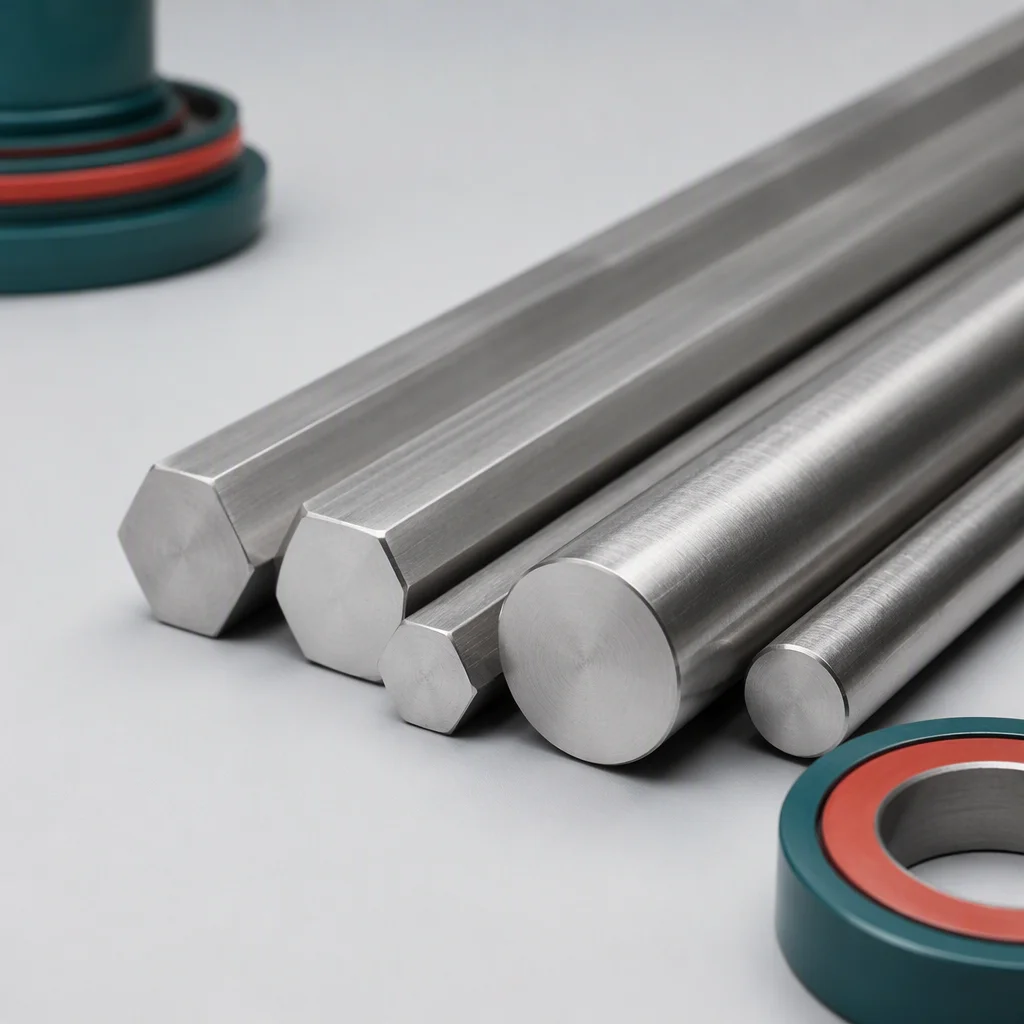
316L stainless steel UQD coupling bodies after CNC machining
316L · Stainless

316L Stainless Steel

The default valve-body alloy for liquid cooling. 316L stands up to glycol-loop corrosion and is qualified against deionized water, water-glycol mixtures and fluorinated fluids — one material covering the coolants data centers actually run.

  • CoolantsDI water / glycol / fluorinated
  • Rolevalve bodies, seats
  • Conditionpassivated
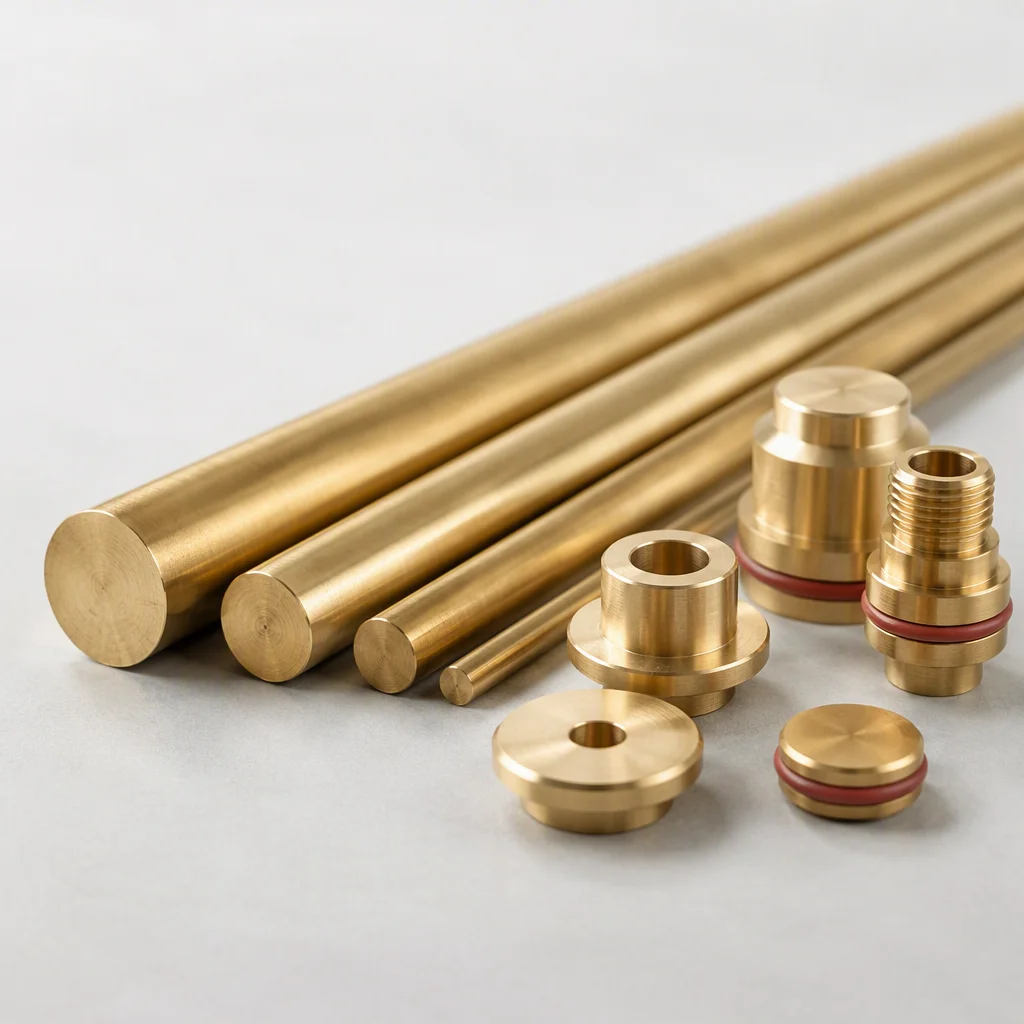
Brass manifold core with machined threaded ports
Brass · Machining Grade

Brass

Chosen where multi-port manifold cores and threaded ports need fast, clean chip formation and stable thread quality. Lead-controlled supply keeps copper-alloy parts inside the RoHS 6/c machining exemption — at or below the 2.2% lead level disciplined suppliers target.

  • RoHS status6/c exemption · 4% Pb cap
  • Lead practice≤ 2.2%
  • Rolemanifold cores, ports
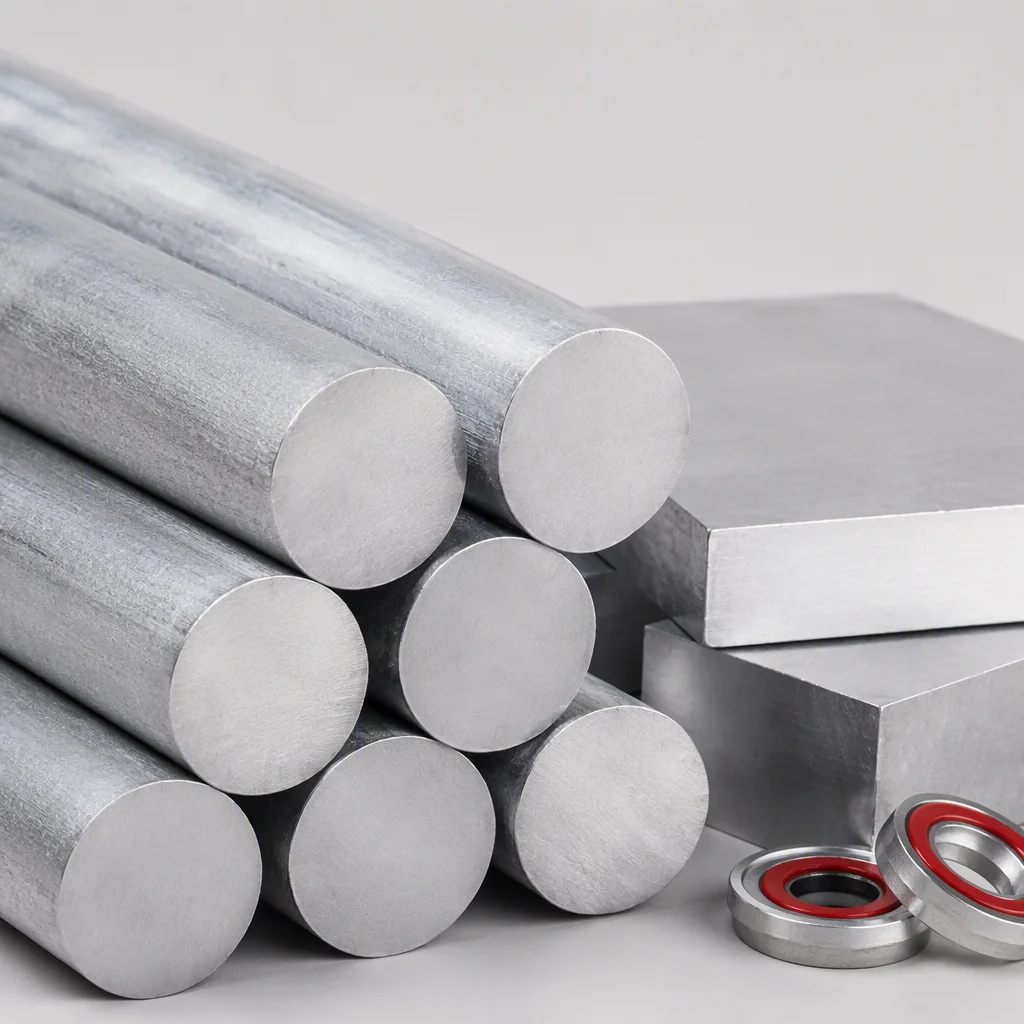
Anodized aluminum manifold housing components
Aluminum · Anodized

Aluminum

Used for weight-critical brackets, housings and structure around the loop where the coolant never wets the part. Anodized finishes are verified in 48 hours of neutral salt spray per ISO 9227 before a surface recipe is released to production batches.

  • Finishanodized
  • Corrosion checkISO 9227 · 48 h NSS
  • Rolehousings, brackets
FAQ

Machining questions buyers actually ask.

Do parts ship with material certificates?
Every batch ships with material and heat-lot documentation, and first-article batches add a full CMM dimension report against your drawing — so incoming inspection can verify before the parts reach a loop.
What is the minimum order quantity?
50 pieces per part number. Pilot builds at MOQ run on the same cells with the same test scope as volume batches, and standard catalog sets ship in 15 days after the drawing is frozen.
Which drawing formats do you accept?
STEP plus a 2D PDF or DWG is ideal. Mark sealing faces, port threads and envelope-critical dimensions — the 48-hour DFM review answers on exactly those features first.

Send the drawing. Get a machining answer in 48 hours.

Port maps, tight envelopes or a failed sample — MOQ from 50 pieces and a 15-day standard lead time make pilots cheap to try.