DryLink UQD & UQDB quick disconnects · rack manifolds
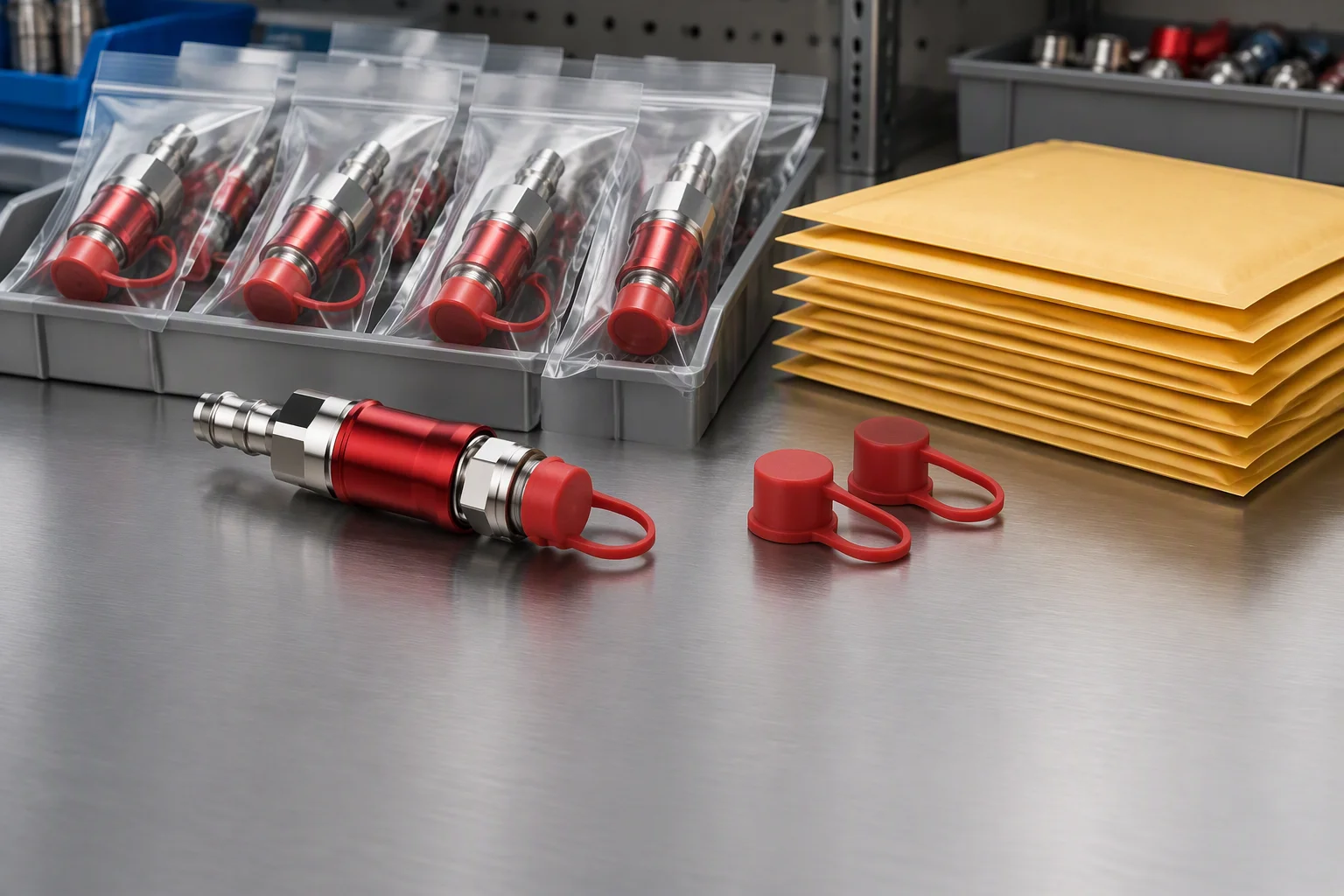
Rendering: a packing bench seen straight on with couplings bagged in sealed clean bags, dust plugs fitted, blank envelopes stacked beside them

FAQ · Sourcing, specs, sampling, shipping

FAQ — Sourcing, Specs, Sampling and Shipping

Six groups of answers, no please-contact-us.

Request spec sheet

Prototype MOQ · industry-typical 5–10 pcs
T1 lead time · industry-typical 2–3 weeks
Reply time · commitment 1 business day

From inquiry to volume

6 steps · quantities and weeks

01

Send the interface

Target size family or rack standard; one line is enough.

02

Reply in one business day

English quote plus a one-page spec sheet.

03

NDA and drawing review

2D or 3D in; redlines back against the loop diagram.

04

T1 prototype

5 to 10 pcs; 2 to 3 weeks, or 3 to 4 weeks for custom geometry. industry-typical

05

Pilot lot

50 pcs up; 3 to 4 weeks after design freeze. industry-typical

06

Volume

4 to 6 weeks on mature models. industry-typical

A custom part usually takes 2 to 3 prototype rounds. NDA, rounds and ramp: project support.

Standards and interchangeability

Revision · colour marking

Q1

Are these couplings interchangeable with couplings from other suppliers?

The interface is fixed by the OCP UQD specification, Revision 1.0. A plug and socket from different makers, each designed to that specification, share the same envelope, flow and colour-marking requirements. A merged draft revision dated 2025-04-16 exists and is tracked; current designs stay on Revision 1.0 until it is superseded.
Q2

Why are the couplings red and blue?

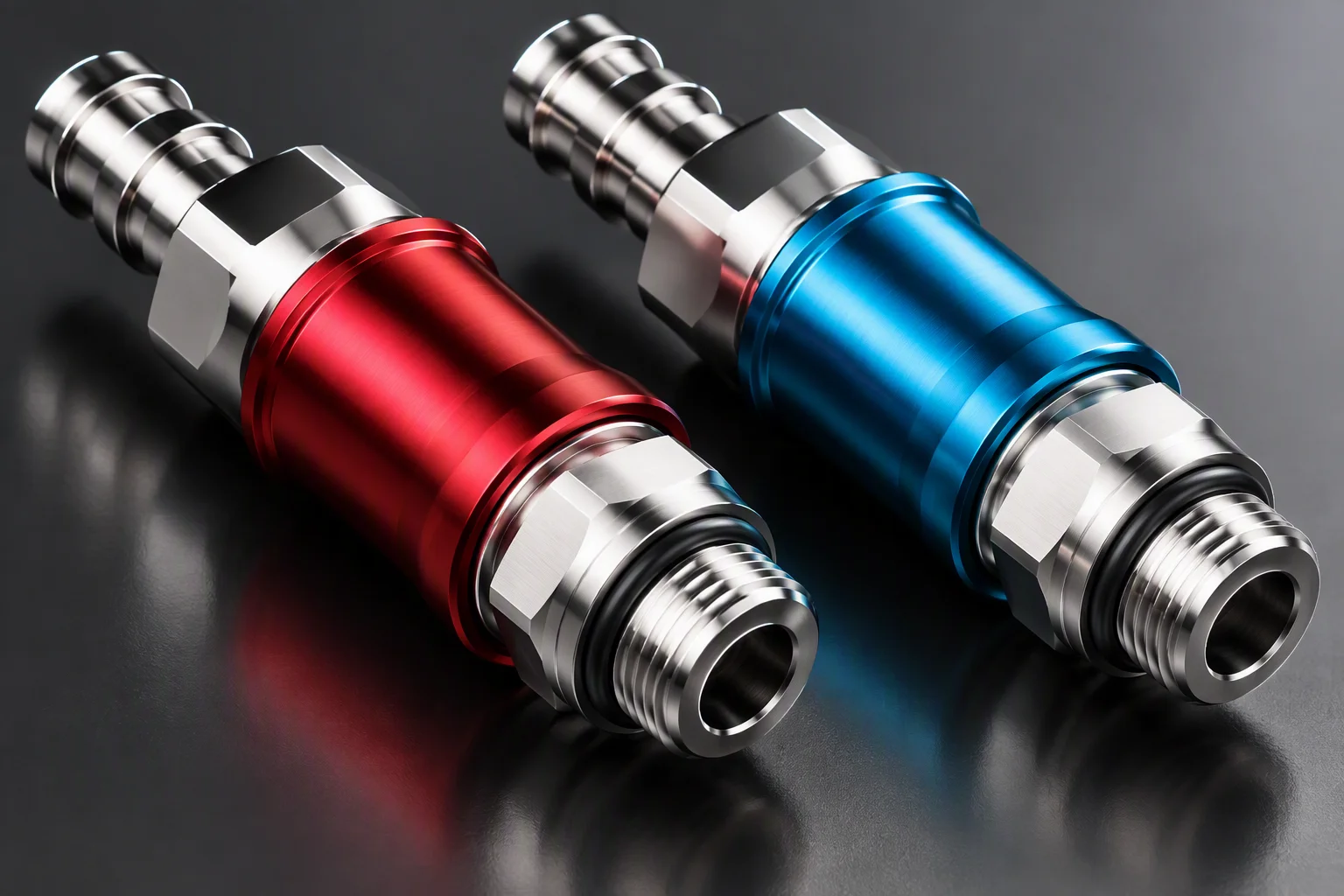
Colour marking is a mandatory item in the specification, not a styling choice. The colour sits on the coupling body so a supply line can be told from a return line without tracing it back. Both colours belong to the standard; neither is a brand colour.

Q3

Can I mix brands in one loop?

Interchangeability is a property of the interface. Sealing behaviour and connect force belong to each maker's part, so a mixed pair is verified on the bench before the BOM is frozen. Redundant multi-lobed seal construction is the industry reference pattern; ask each maker which pattern their part uses.

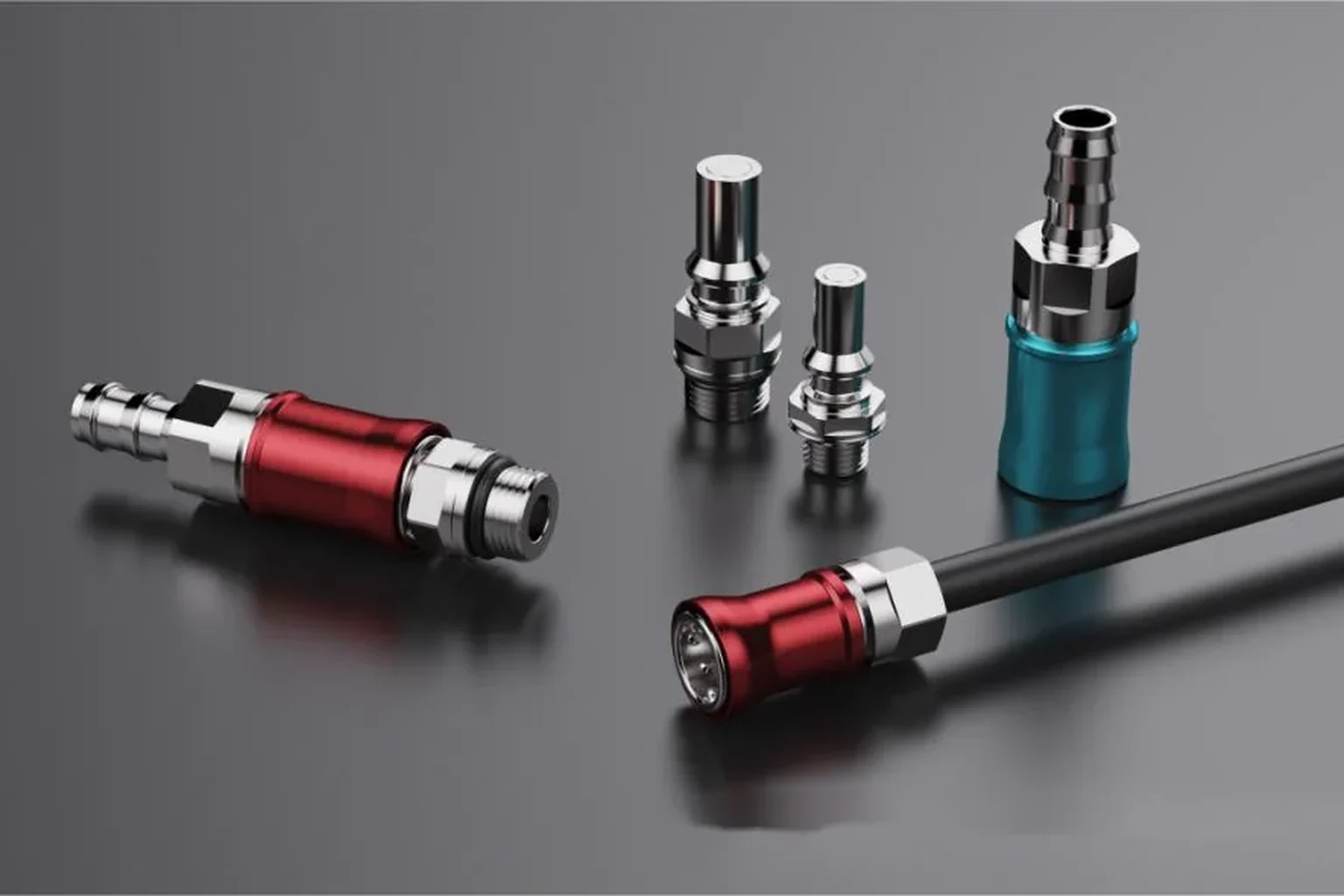
Rendering: five UQD-series couplings with red and cyan anodised rings and chrome bodies on a neutral grey gradient ground
UQD seriescolour-marked
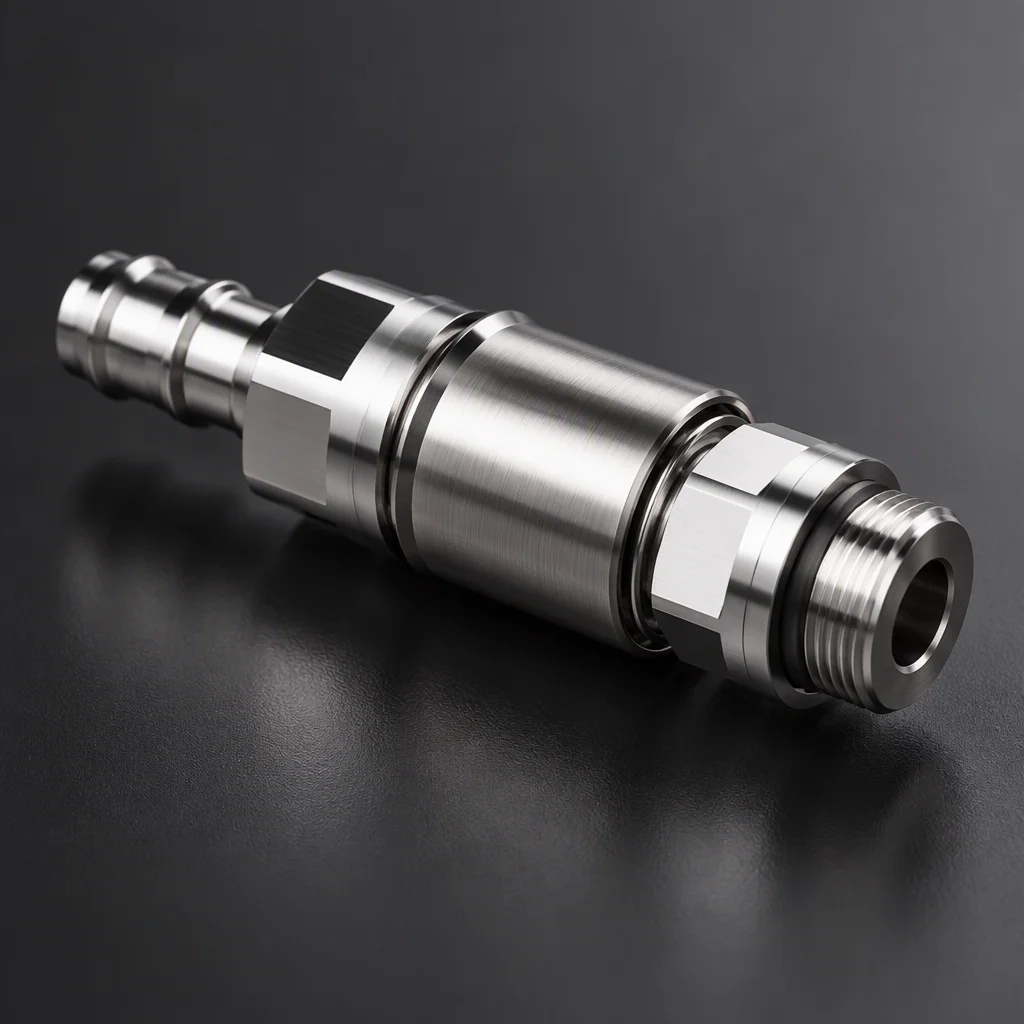
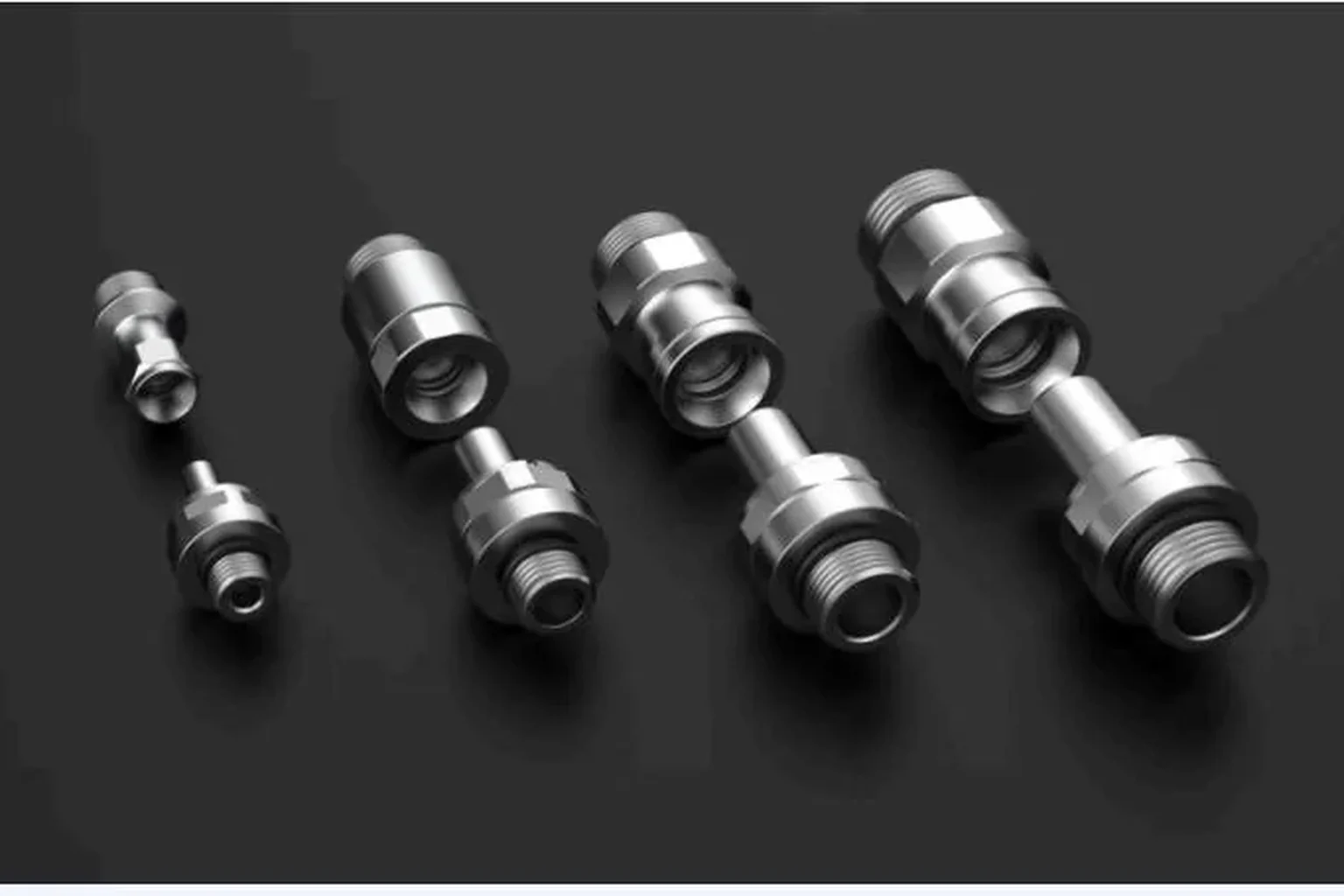
Rendering: four blind-mate pairs in bare stainless arranged diagonally in ascending size on a near-black ground
UQDB familybare stainless
Rendering: a machined coupling spigot on a brushed stainless rack panel, blue latch levers beside it and a black hose running out of frame
Rack sidepanel and hose run

Performance numbers

Internal volume · loss per disconnect

Q4

How much fluid stays inside, and how much escapes on a disconnect?

Total internal water volume by size: 1.7 ml (UQD02), 3.2 ml (UQD04), 3.8 ml (UQD06), 5.7 ml (UQD08). At 0 psi the specification caps fluid loss per connect or disconnect at 0.020, 0.025, 0.035 and 0.070 ml in the same size order.

Q5

Can I disconnect under pressure?

The coupling is a dry-break part: the socket closes on disconnect, so what escapes is bounded by the values in the answer above, measured per connect or disconnect. Those values are stated at 0 psi. In a maintenance window, depressurise the branch you are breaking before you swap.

Q6

Which sizes exist, and which one do I need?

Four sizes: UQD02 (1/8 in), UQD04 (1/4 in), UQD06 (3/8 in) and UQD08 (1/2 in). Internal volume rises with size, from 1.7 ml to 5.7 ml. If the size is not decided yet, send the flow rate and the tube size and the reply carries the sizing.

Rendering: one coupling with a red anodised ring beside one with a blue anodised ring, both in the same lapped stainless finish

Two couplings, two marked rings. Which line a ring marks is set by the specification.

The size ladder

4 classes · volume · both ends

Rendering: one mated one-eighth-inch quick-disconnect pair alone on a dark ground, the smallest body in the set
UQD021.7 ml
Rendering: one mated quarter-inch quick-disconnect pair alone on a dark ground
UQD043.2 ml
Rendering: one mated three-eighths-inch quick-disconnect pair alone on a dark ground
UQD063.8 ml
Rendering: one mated half-inch quick-disconnect pair alone on a dark ground
UQD085.7 ml
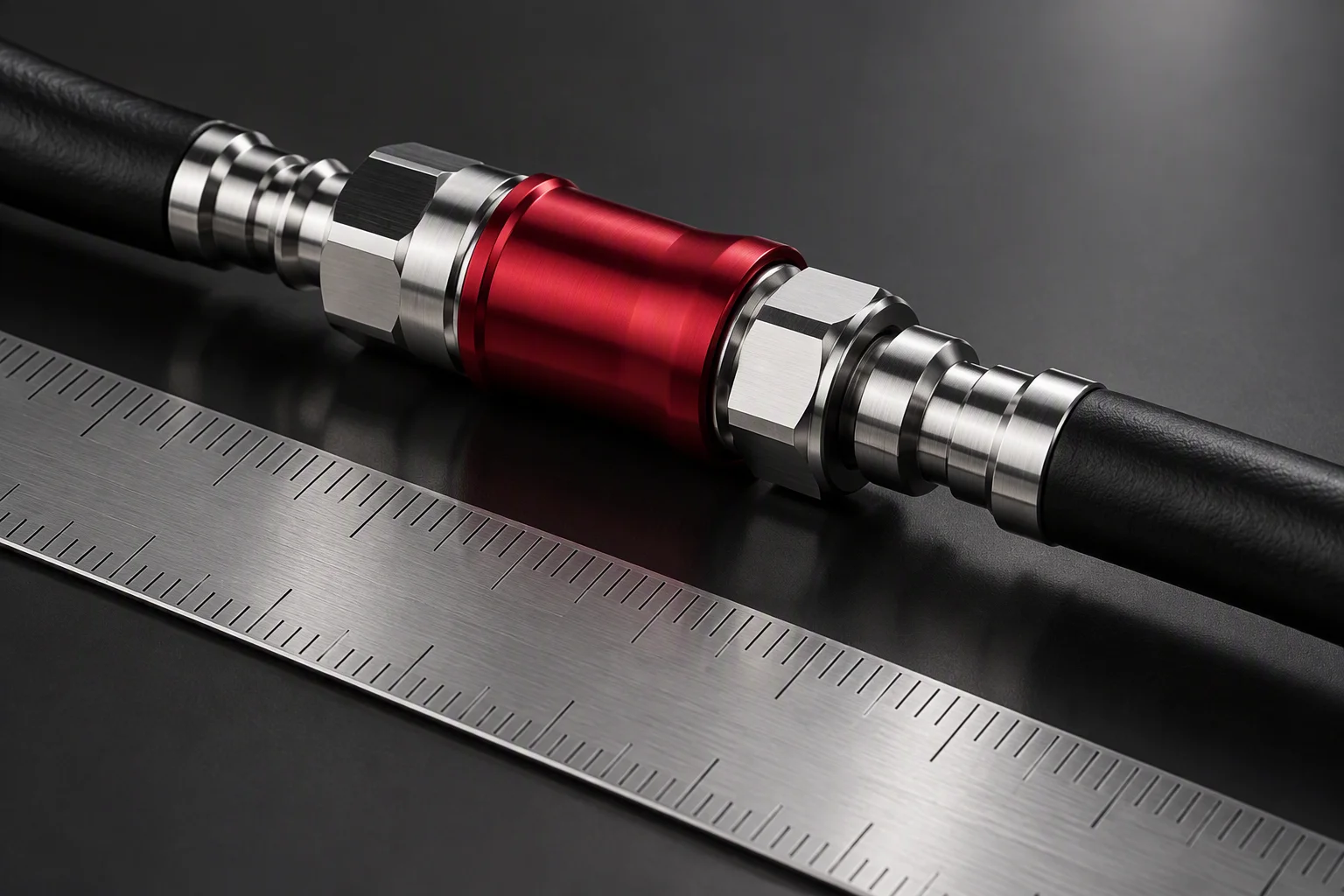
Rendering: one quarter-inch mated pair laid beside a satin steel rule, both hose ends visible
Lower endUQD04, against a rule
Rendering: a half-inch mated pair beside a steel rule, the widest body in the set
Upper endthe widest

Both scale references are renderings. Sizing derivation: the choosing-a-size note.

Seal construction and documentation

Multi-lobed · service count

Q7

What documentation ships with an order?

Process documentation is maintained to an ISO 9001-aligned process. Every lot is serialised, so a part in the field traces back to its build record. The test data that ships is the data for the acceptance band you specify, so name the band in the RFQ instead of asking for a pass or fail.

Which band, and how it is measured: quality page.

Q8

How are the seals built?

Redundant multi-lobed seal construction is the industry reference pattern, and dual EPDM is the matching material benchmark for this interface. Ask for the seal construction drawing with the quote, and check the seal material against the fluid you actually run.

Q9

Do seals have a replacement interval?

Replacement follows connect and disconnect count, not the calendar. Every service swap costs one cycle and the small fluid volume listed above, 0.020 to 0.070 ml at 0 psi. Log the swaps per position and the seal budget follows the log.

Cross-section of the seal seat, drawn to no scale.

Sampling and production

Prototype · pilot · volume

Q10

What is the minimum order for samples?

Prototype quantities start at 5 to 10 pieces. Pilot lots start at 50 pieces. Those are industry-typical published values, and the quote is written against your drawing rather than against a catalogue line.

Q11

What are the lead times?

T1 samples: 2 to 3 weeks standard, 3 to 4 weeks for custom geometry. Pilot lot: 3 to 4 weeks after design freeze. Volume: 4 to 6 weeks on mature models. A custom development typically runs 2 to 3 prototype rounds.

Q12

Is FAI documentation available?

First-article documentation is issued with the T1 lot. On a custom part the 2 to 3 prototype rounds are documented as they happen, so the FAI is a record of the development rather than a formality at the end. State the FAI format you need in the RFQ.

US classification

Valved · valveless · two chapters

Q13

Which US code applies to a valved coupler?

Valved couplers classify under HTSUS 8481.80.3090. That comes from US CBP ruling NY N071713, which placed a quick coupler with a hand-operated valve in heading 8481.80. The ruling reference is shared with the quote on request.

Q14

And a valveless fitting?

Without valve mechanisms the part has been classified as an iron or steel pipe fitting: 7307.92.3010, from US CBP ruling NY K81592. The two rulings sit in different chapters, so the duty treatment and the paperwork differ. The right code follows the configuration you actually buy.

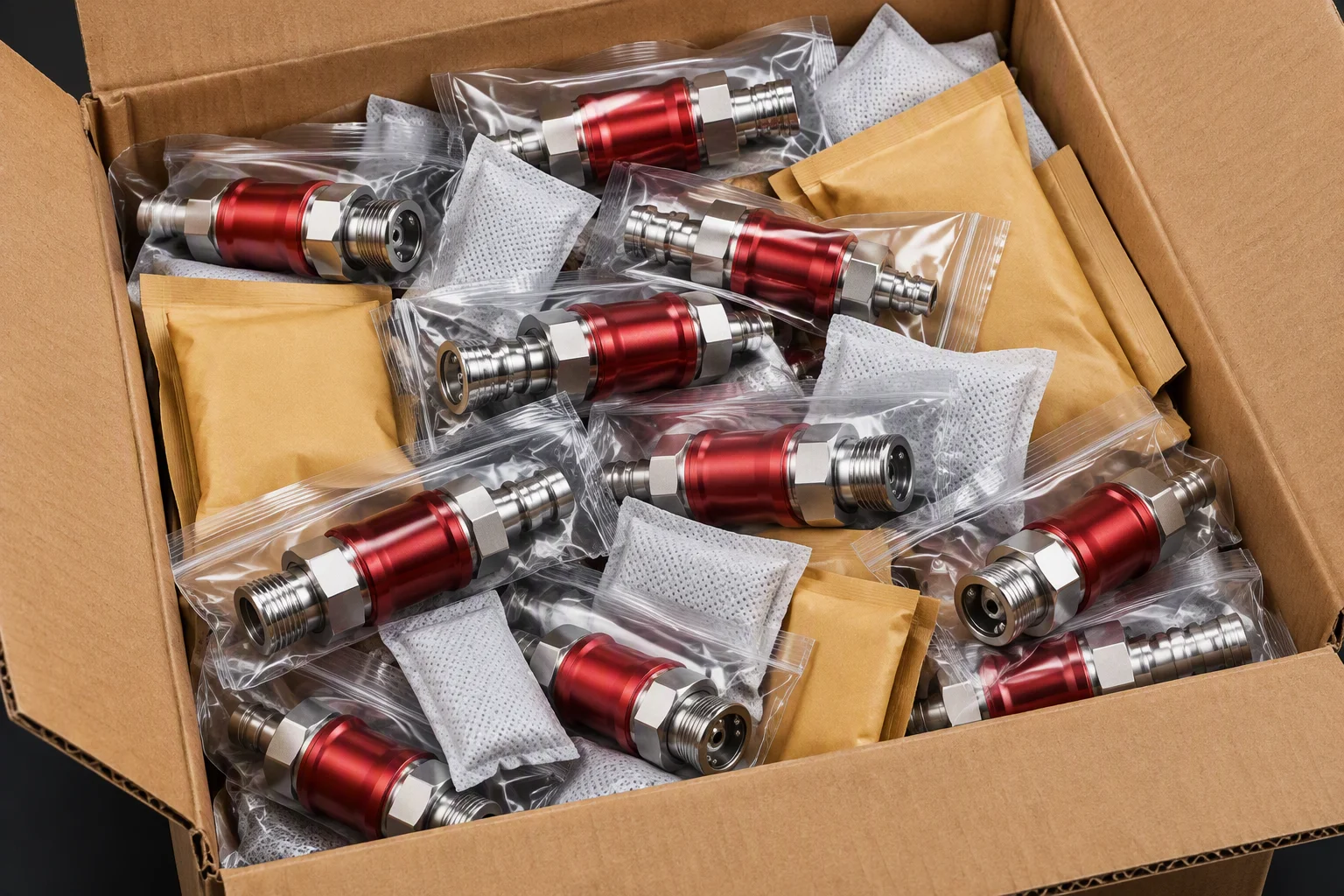
Rendering: an opened shipping carton revealing individually bagged couplings, desiccant sachets and blank documentation envelopes

No waybill or barcode in the frame — a rendering, not a photograph of a parcel.

Export codes and sample shipments

China-side practice · samples · manifolds

Q15

What is the China-side export code?

China export practice for valved couplers runs under 8481.80, commonly declared as 84818090. Confirm it per shipment against the actual configuration, because the code follows the valve, not the product family name.

Q16

How are sample shipments handled?

Samples are classified by the same split as production: valved parts one way, valveless parts the other. Give the destination country in the RFQ and the classification is settled before the box is packed, so nothing is decided at the counter.

Q17

What code applies to a rack manifold?

No published ruling separates manifolds from the pipe-fitting and valve headings, so this one is decided case by case. Send the configuration and the destination, and the classification is documented with the shipment instead of guessed in advance.

When classification is settled, and what travels with the goods: contact page.

Coolant and spares

Fluid chemistry · storage

Q18

What coolant is the coupling designed for?

Fluid chemistry drives seal choice, so name the loop fluid in the RFQ. The compatibility baseline for this interface is a PG25-class inhibited glycol. Two volumes matter here: the fluid the part holds, 1.7 ml at UQD02 to 5.7 ml at UQD08, and the volume lost per disconnect, 0.020 to 0.070 ml.

Q19

How should spares be stored?

Spares are stored sealed with the dust plugs in place, and stock is lot-dated so the oldest part goes out first. Internal volume is small, 1.7 to 5.7 ml, so the fluid-side question is cleanliness rather than volume. Cycle count, not shelf time, is what retires a coupling.

The fluid side in full: coolant compatibility and leak testing.

Spec sheet · classification · sample plan

Still one question short of a decision?

Send the one that is left, with the interface it applies to.

Request spec sheet One business day · English quote + a one-page spec sheet
Spec sheet UQD02–08 and UQDB03–06
Classification the code follows the valve
Sample plan prototype quantities, your drawing