Selection note · spec values + derived math
Pick the size from the loop
Size the coupling from required loop flow, then check loss, life and the pressure basis.
Request mating samples01
Loop first
Work out the required flow and the pressure drop the loop can spend, before any part number is discussed. The coupling's own Cv has to sit inside that budget, not beside it.
02
Grade second
Pick the grade from the recommended-flow ladder — 0.55 / 1.7 / 3.0 / 4.7 GPM across the four UQD grades, and step one grade up as transient headroom. per the OCP UQD specification
03
Then the interface
Only then check the termination against the hose bore you are actually running. A grade that fits the flow but not the hose is a redesign, not a substitution.
The coupling is the narrowest section of the loop — size it small and the whole loop pays for it.
The four grades, on one sheet
Cv · flow · Q/Cv · ΔP ≈ · loss cap
Part
Min Cv (water)
Recommended flow
Q/Cv at grade
ΔP ≈ (Q/Cv)², SG = 1
Loss cap @ 0 psi
UQD02
Min Cv0.25
Recommended flow0.55 GPM
Assumed rate2.20
Assumed rate≈ 4.8 psi
Loss cap0.020 ml
UQD04
Min Cv0.80
Recommended flow1.7 GPM
Assumed rate2.13
Assumed rate≈ 4.5 psi
Loss cap0.025 ml
UQD06
Min Cv1.60
Recommended flow3.0 GPM
Assumed rate1.88
Assumed rate≈ 3.5 psi
Loss cap0.035 ml
UQD08
Min Cv2.50
Recommended flow4.7 GPM
Assumed rate1.88
Assumed rate≈ 3.5 psi
Loss cap0.070 ml
Cv and flow ladder: per the OCP UQD specification · loss caps: per the OCP UQD specification · the Q/Cv and ΔP columns do not exist in the specification — this note divided the two columns and squared the result. SG = 1 throughout.
Flow taken at grade is the conservative choice: Q/Cv falls from 2.20 to 1.88, so the larger grade spends a smaller share of the same drop.
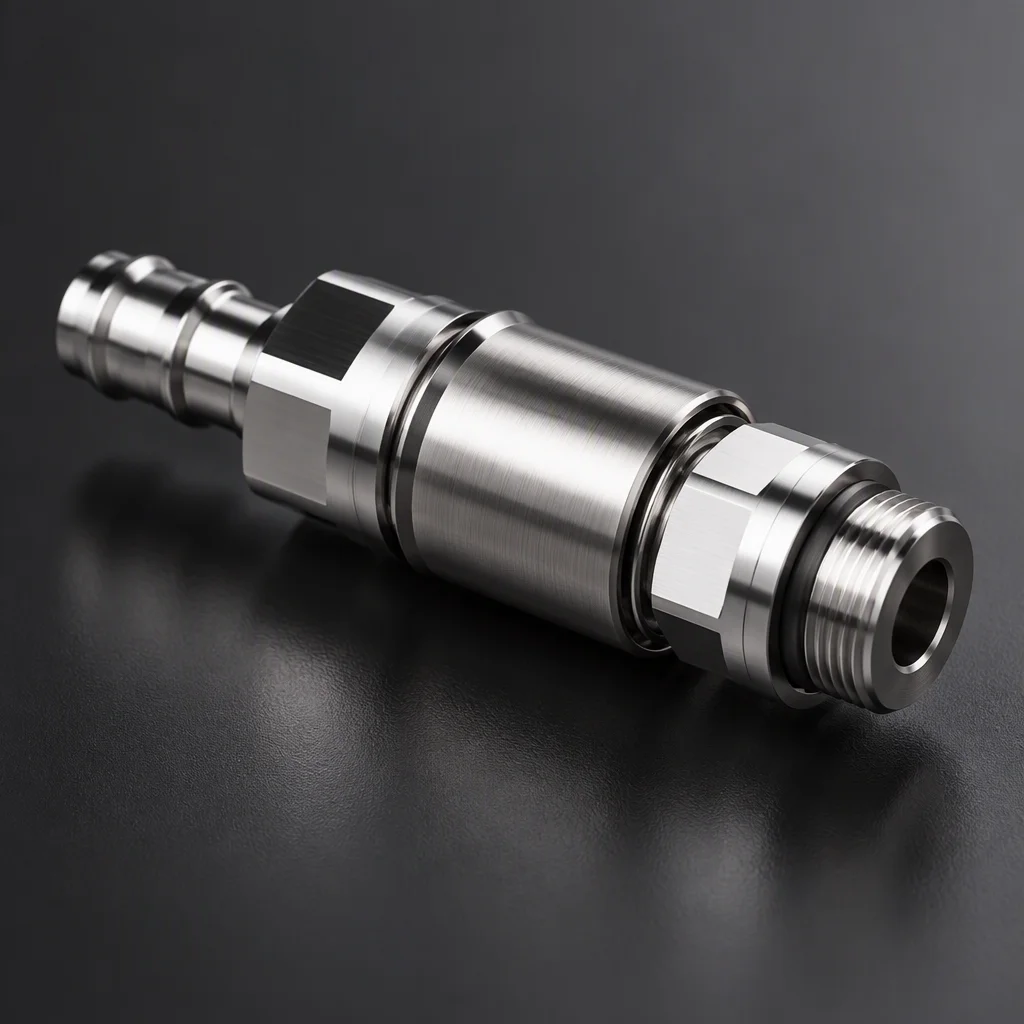
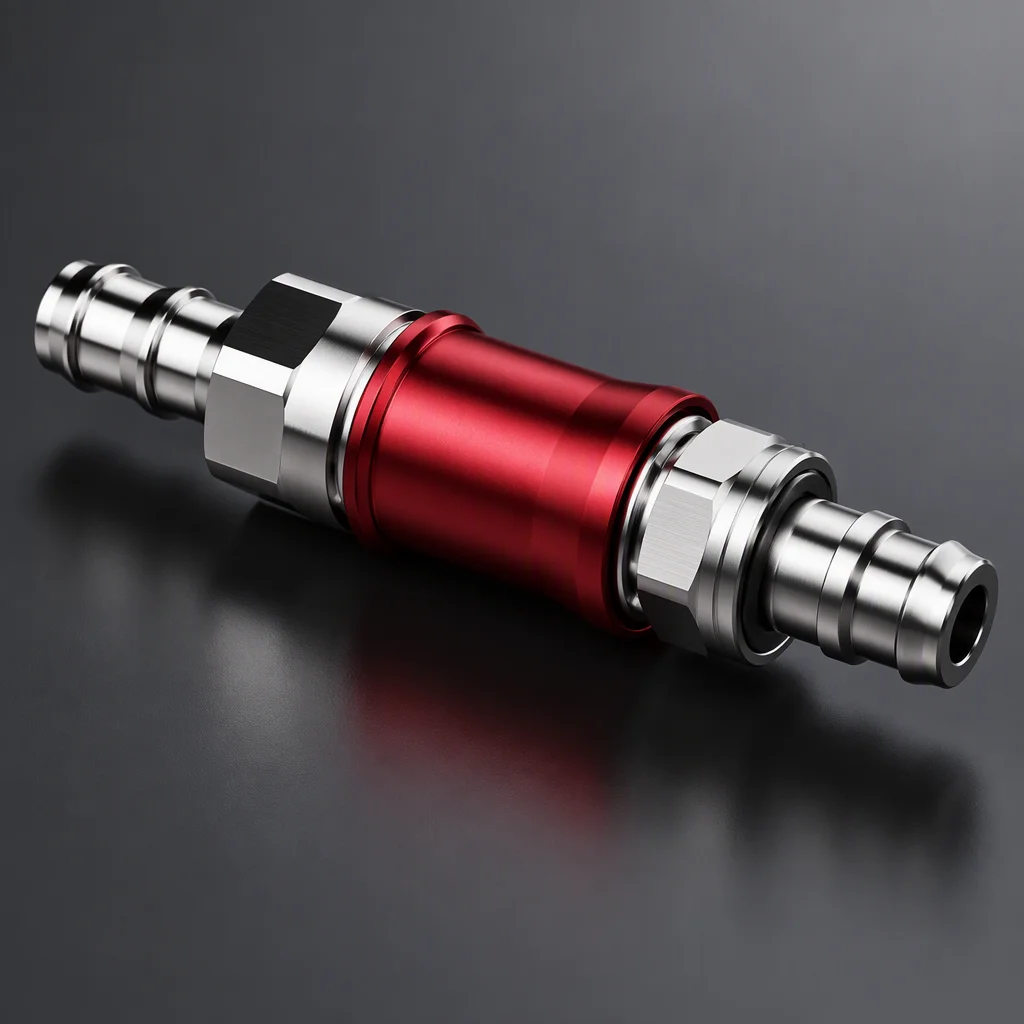
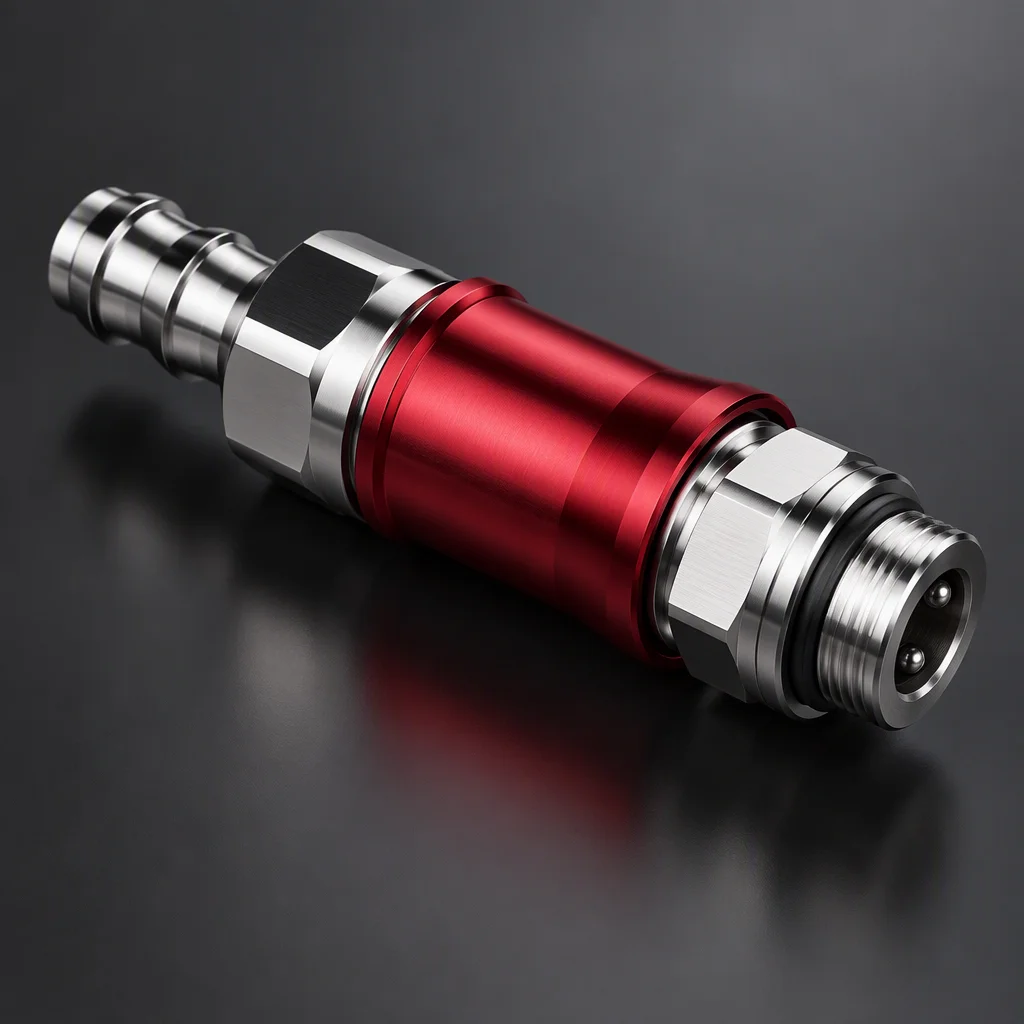
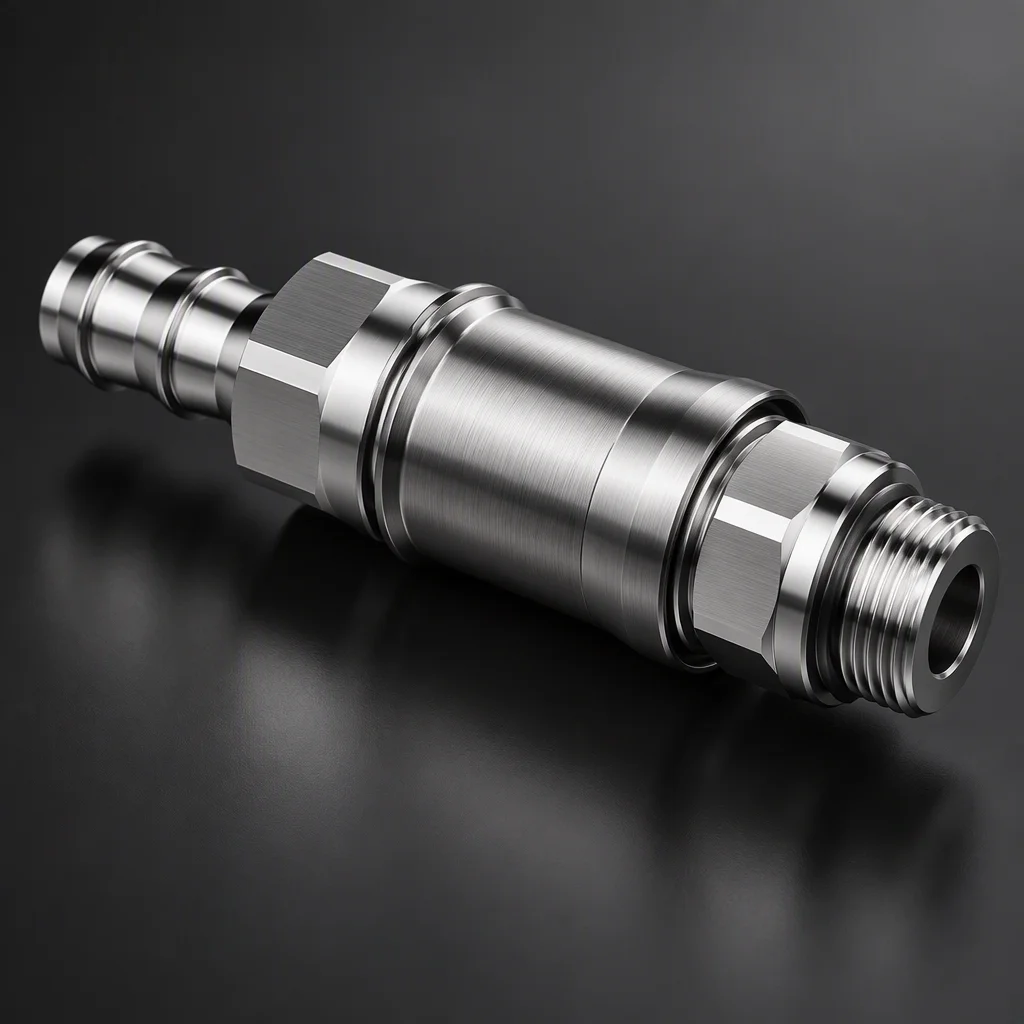
The family, in metal
One cell per grade · same scale in the set
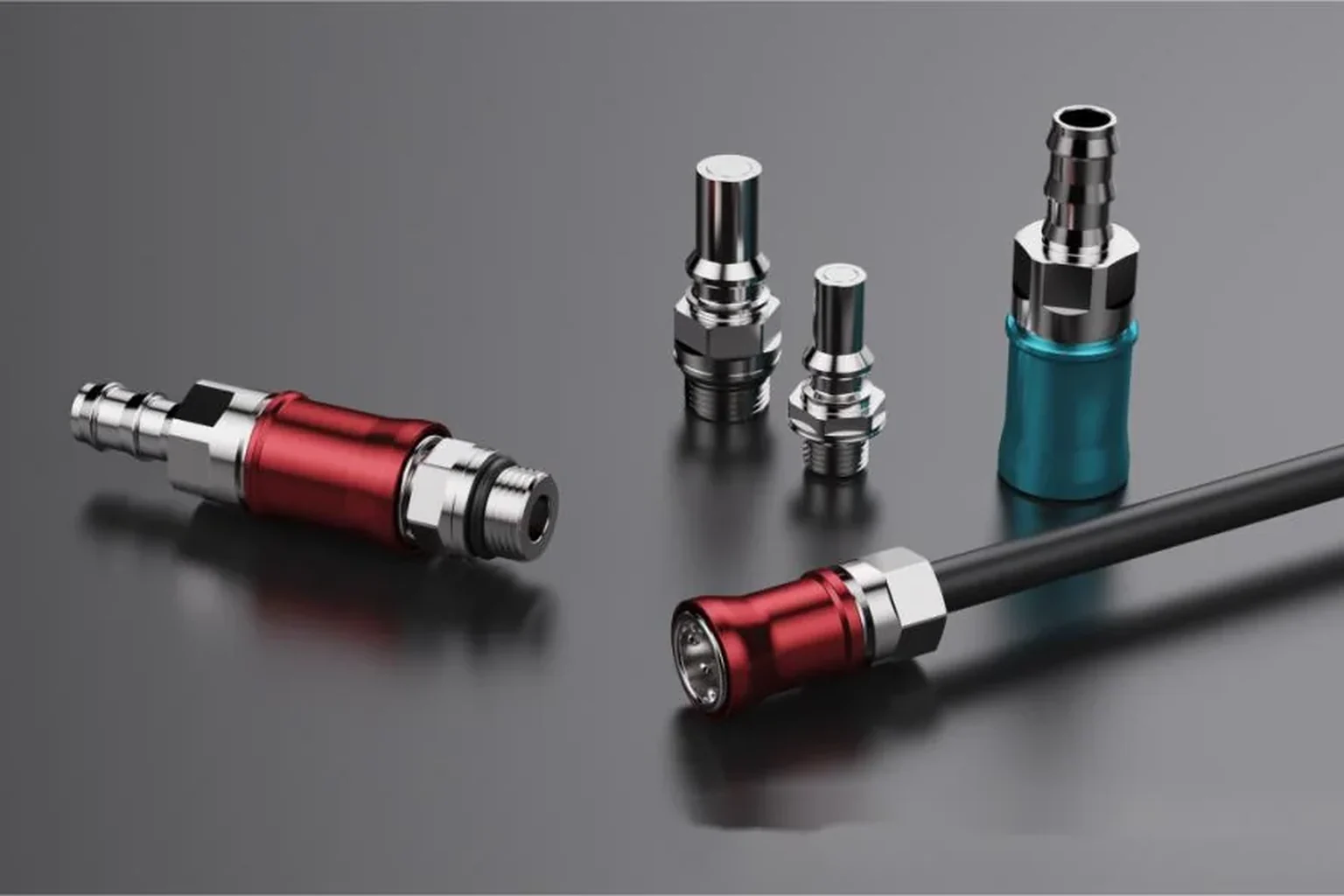
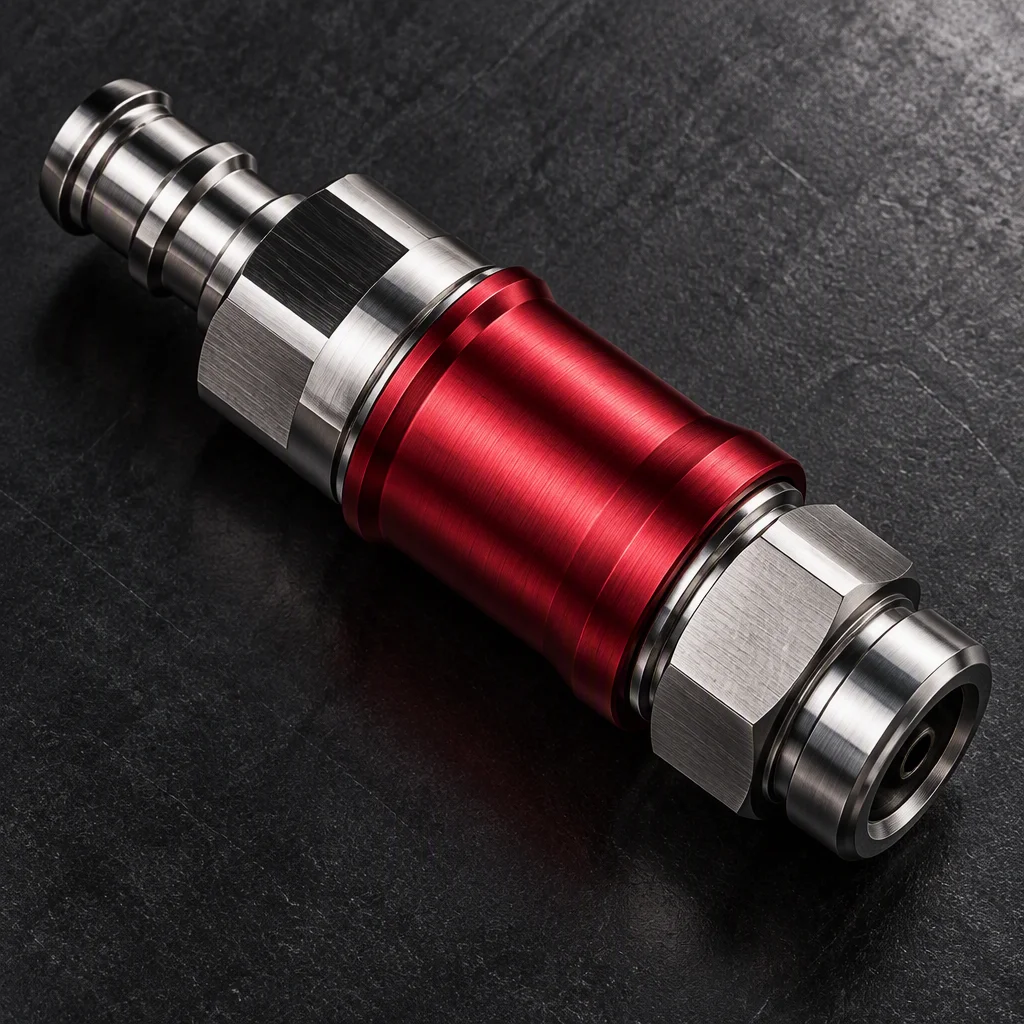
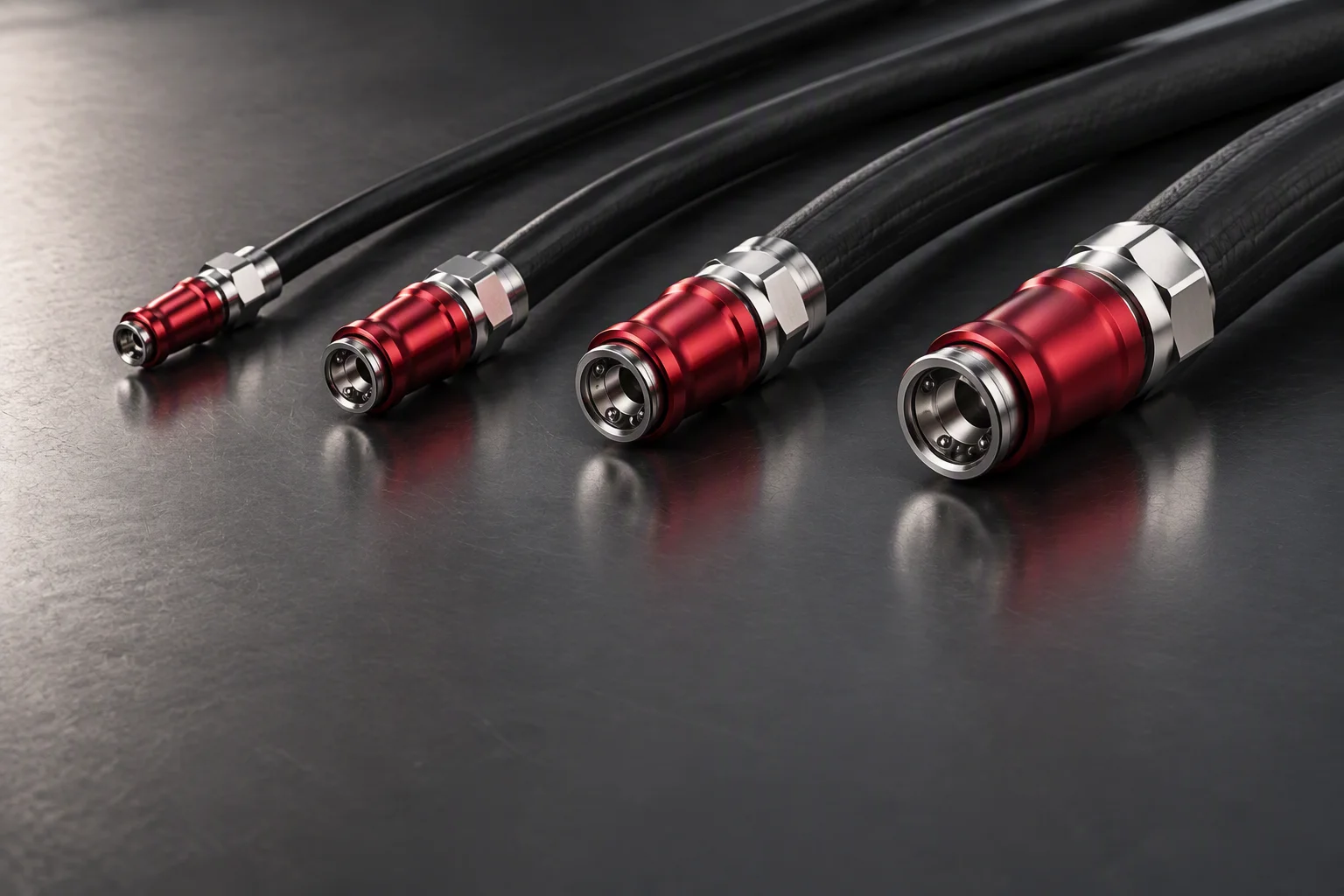
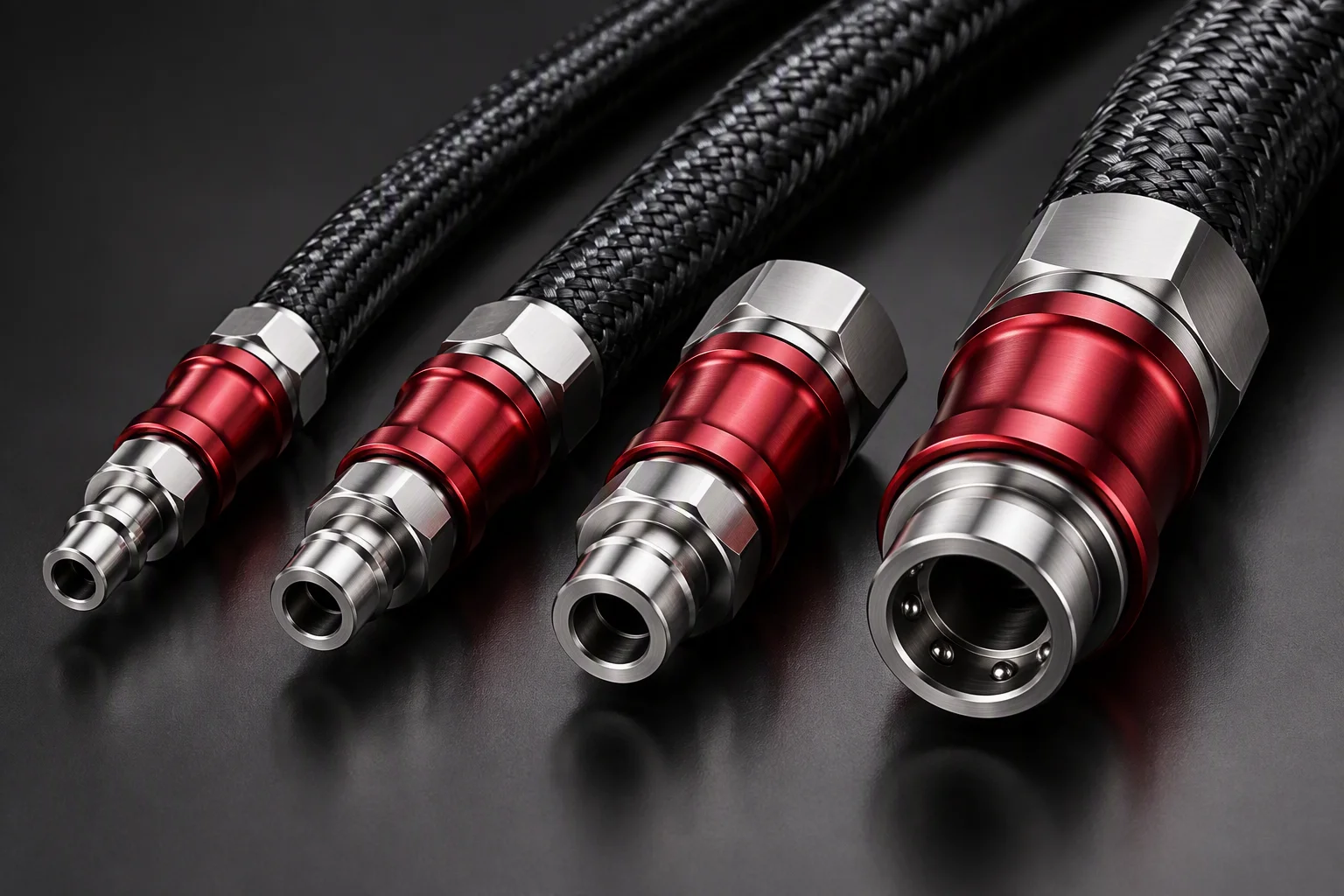
The four grades differ by bore, not by body length or lock design. What changes between them is the flow they can carry at grade and the loss cap that rides with it — the ladder above and the table before it are the whole difference. Colour marking separates supply from return at a glance, which matters more the moment two grades sit side by side on the same tray.
Same scale across the set: the thumbnails below are shot to one scale so the step between grades is the actual step.
What a disconnect costs
Per cycle · aggregate · where it lands
Per cycle @ 0 psi
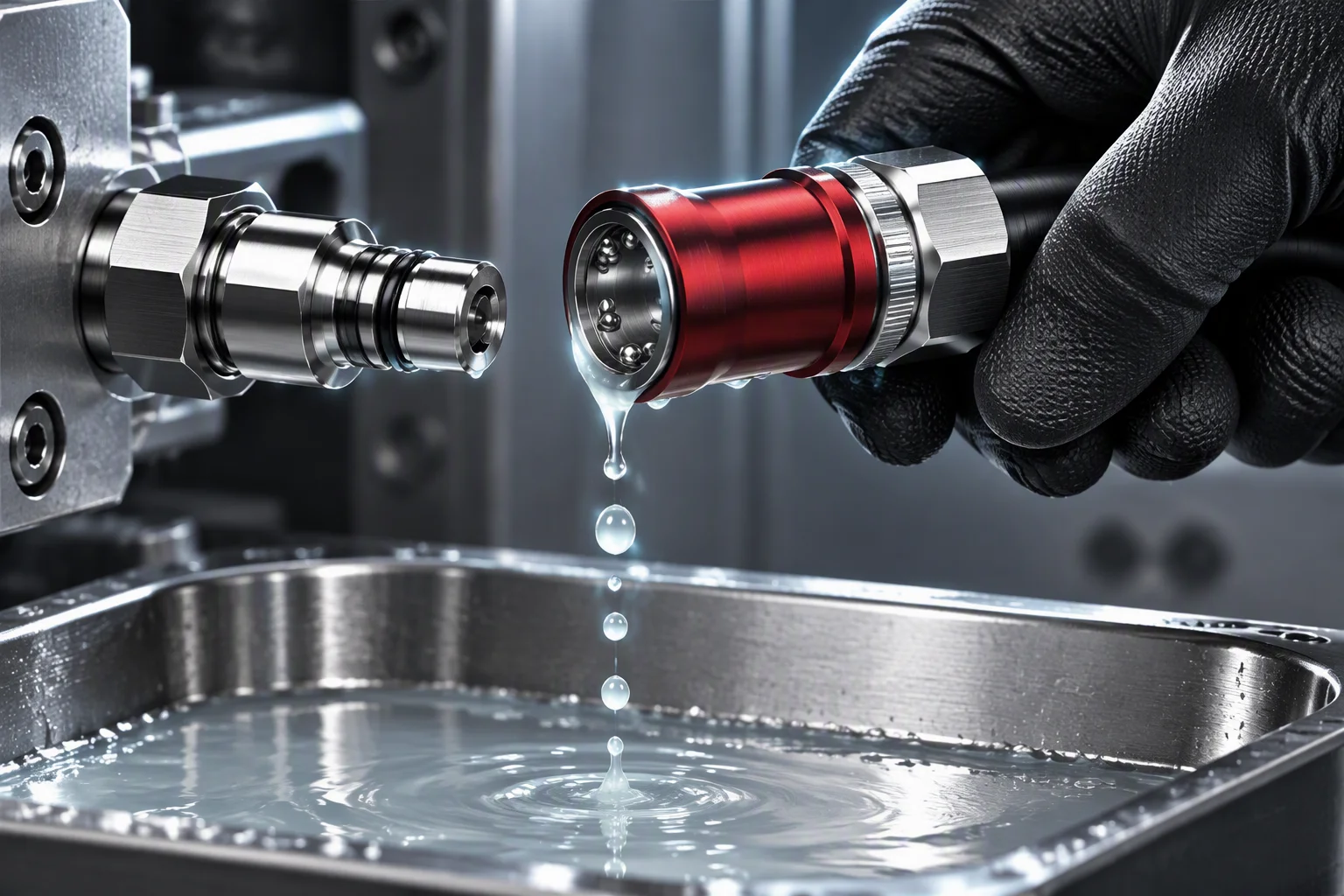
0.020 / 0.025 / 0.035 / 0.070 mlby grade, UQD02 through UQD08. per the OCP UQD specification
Aggregate
The cap multiplied by planned maintenance actions. At the UQD04 cap, a hundred maintenance actions come to about 2.5 ml. derived by this note from the per-cycle cap
Where it lands
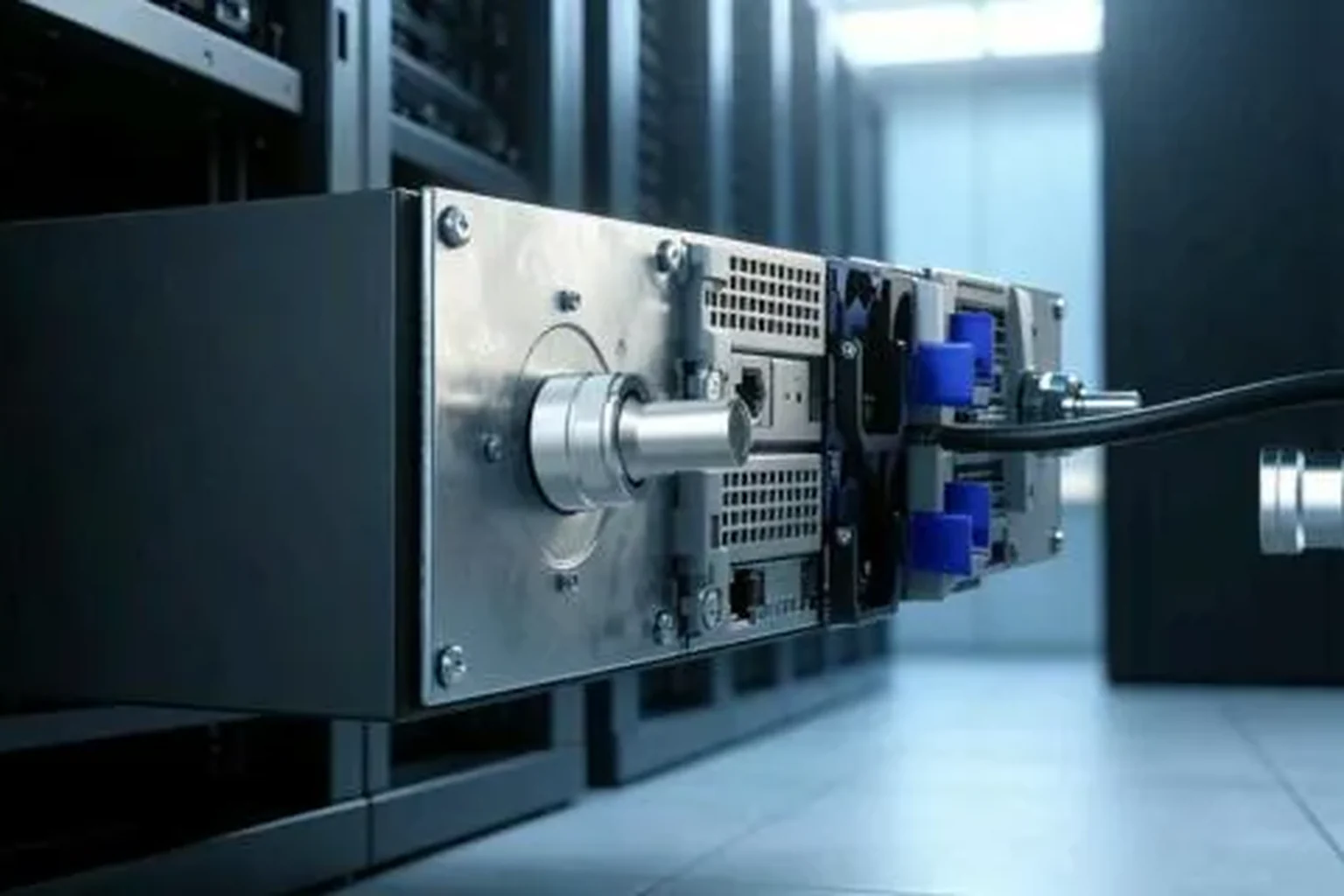
Drip trays under the high-risk positions: rack top, CDU interface, and any vertical run where a bead travels further before it is caught.
The cap is a ceiling, not an expectation — budget with it as a worst case, never as an average.

How long it lasts
Industry range · your number · the assumption
Industry range
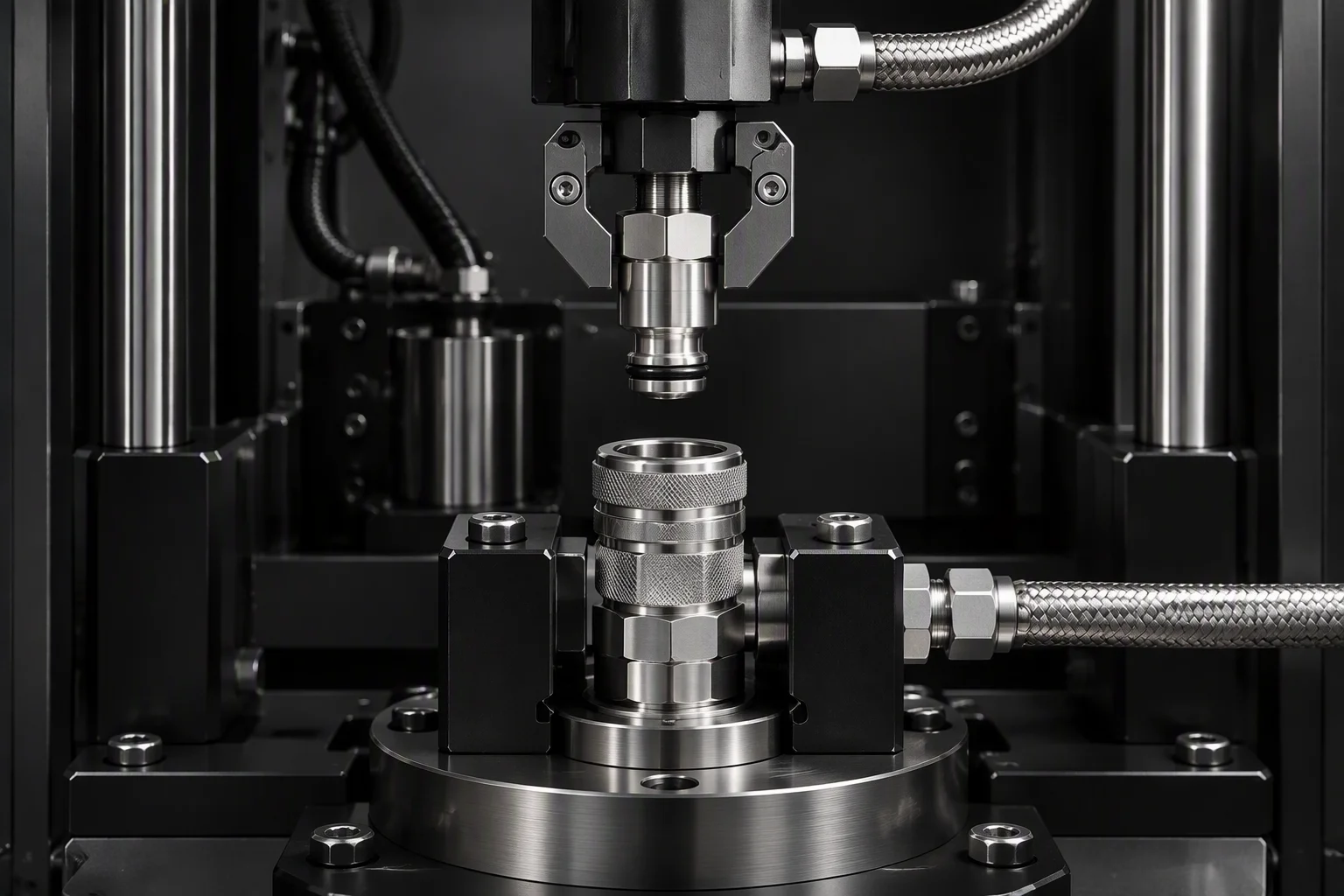
10,000–50,000 cyclesfor quality industry parts, connect plus disconnect counted at both ends. industry guide
Your number
Service life = cycle life ÷ maintenance actions per year. Write the maintenance count down as an assumption; an unwritten assumption is the number nobody reviews.
The 50-to-250-year reading is an assumed example, not a specification value: it holds only while the 200-cycles-per-year assumption holds. Replace it with your own maintenance count before it goes into a document.
Replace on a plan, not on a failure — a cycle counter only helps if somebody reads it before the seal does.
Three pressure words, two of them different
Working · burst · maximum allowable
Reading A · working and burst
290 psi working / 1,160 psi burst industry guide data for one class of part
Two figures from one source, both describing the same part class. Divided, they give a burst-to-working multiple of about 4.0. derived by this note
Reading B · maximum allowable
≈ 16 bar (232 psi) maximum allowable industry guide data for one class of part
A single ceiling: the highest pressure the class is allowed to see, with no pairing to a burst figure at all. industry guide
232 and 290 are not the same quantity — comparing them directly is the mistake. Ask which pressure is meant, and at what temperature.
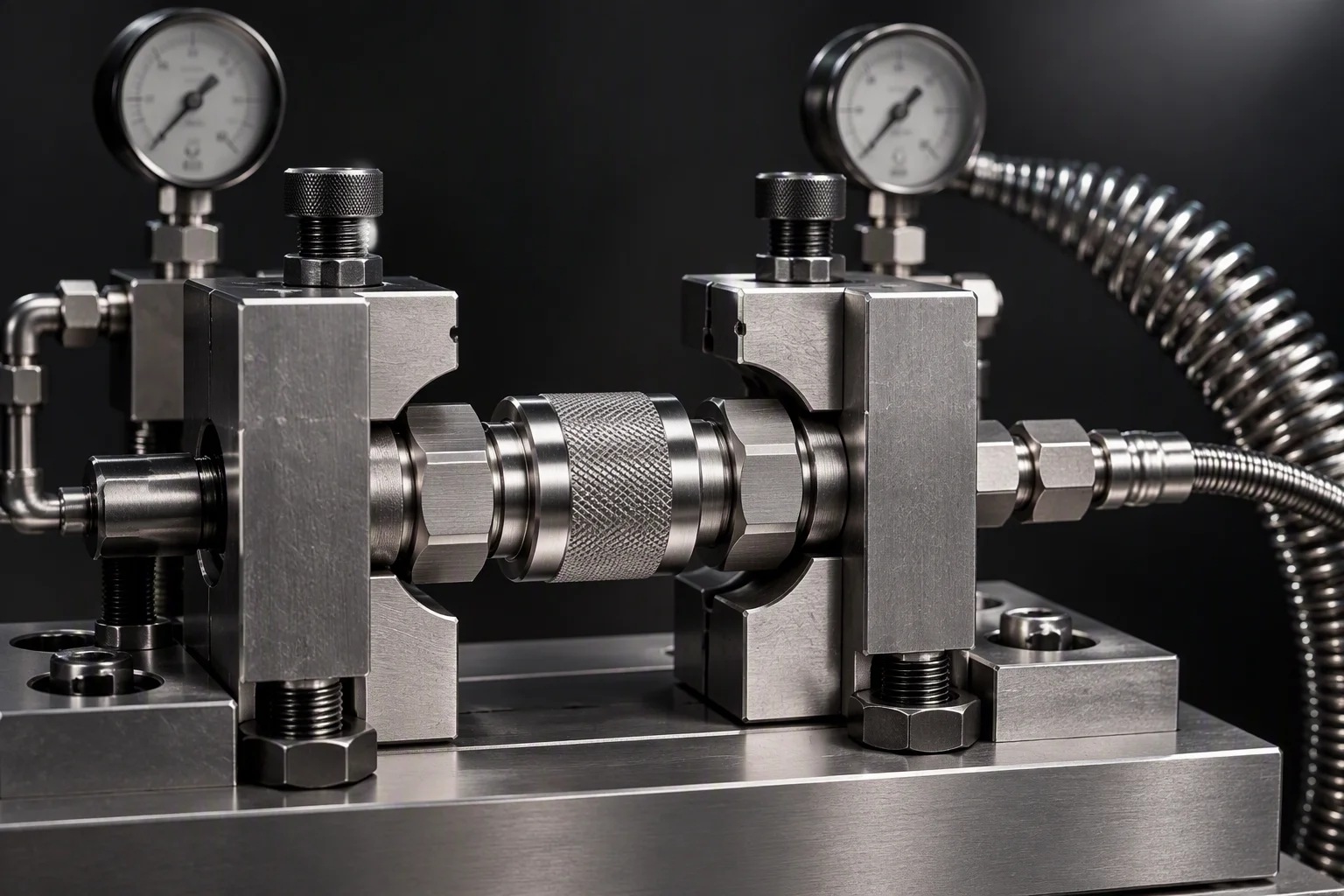
Pump start-up spikes belong in the budget too: size the accumulator and the coupling bore together, or the transient picks the weakest of the two.

Decision table
Which row is your loop?
Application
Starting grade
CPU / GPU cold plate loops
Mid grade to start, then check upward against the flow ladder.
High-density nodes
One grade up, to hold transient headroom.
Rack / CDU trunks
Top of the ladder, where Q/Cv is lowest at 1.88.
Starting grades read off the recommended-flow ladder (per the OCP UQD specification); the Q/Cv figure is this note's own division.
Request mating samples One business day · English quote + a one-page spec sheet
Body and lock parts are machined to the drawing revision the order was placed against; the seal face is lapped and the bore is gauged before assembly. The grade differences in the table above are dimensional, so the process is the same for all four and only the tooling changes.
Published 2026-09-24 · when a figure in this note changes, the note is rewritten and the change is dated here. Sizing questions go through the inquiry form — the reply carries the grade and the mating samples.