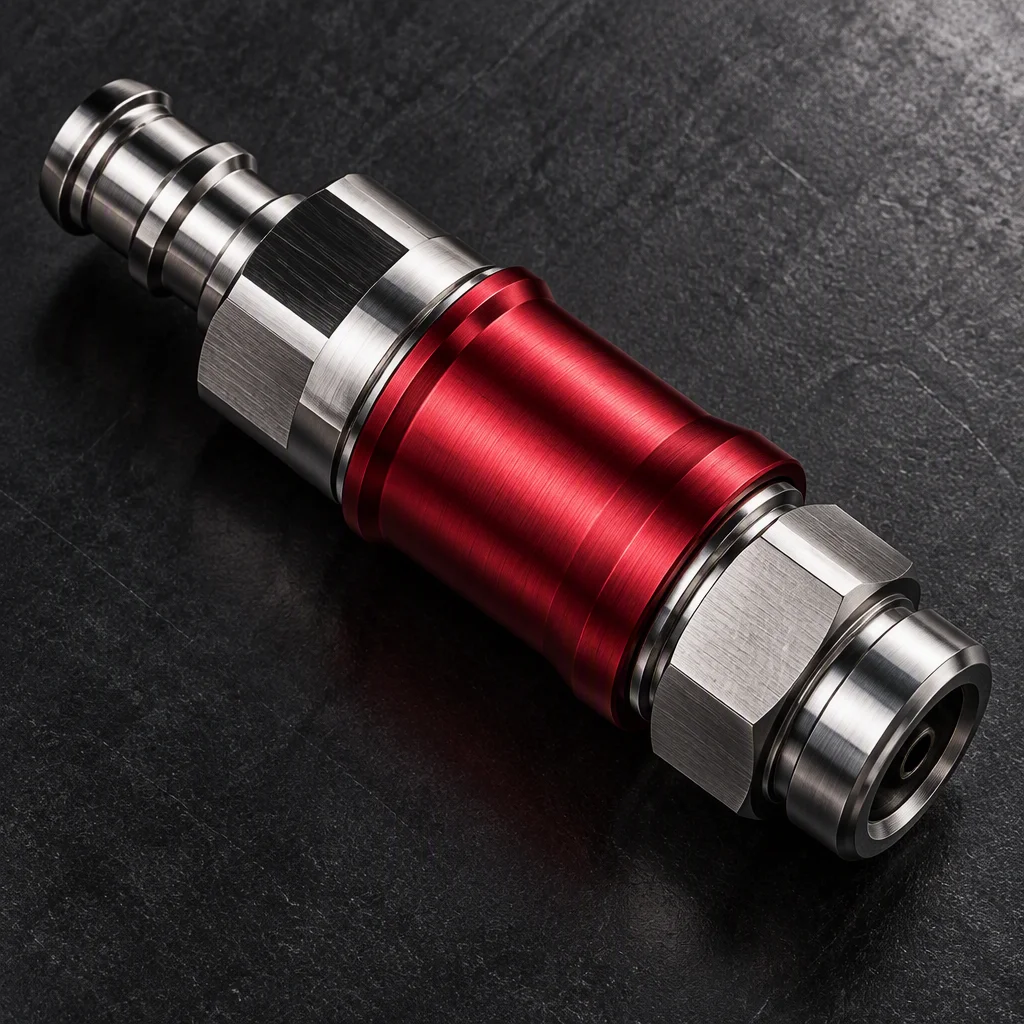

particle control · precision cleaning · clean packing
Clean, measured, sealed
Standards, units and packing: the three things that turn a word into a checkable claim.
Request the cleanliness spec sheetWhy this step sits behind a door
Benchmark practice · entry rule · our wording
Benchmark practice
Couplings of this class are assembled and tested inside semiconductor-grade cleanrooms before they ship. industry practice
Why it matters
A cold-plate microchannel is a particle's direct victim: one shed particle is one blocked channel.
Entry rule
Parts enter the controlled area from the downstream side of the pressure gate. The gate's own numbers stay on the welding page. process capability
Sealed parts only
Already-sealed parts come through the same door; parts that have not passed the gate do not enter. process capability
Our wording
Assembly and packing are carried out in a controlled area, aligned to that practice. process capability


Cleanliness verification
Three standards · one report per batch
ISO 16232
Component technical cleanliness, expressed as particle counts rather than as an adjective.
VDA 19.1
The inspection method that pairs with ISO 16232, so the extraction step is defined too.
ISO 4406
Liquid contamination coding, graded by particle size band.
Report per batch
The cleanliness report is issued against the batch and travels with the parts, so the number can be re-read months later.
Basis
This standard set is the verification practice for precision-cleaned parts. Standard numbers are not certifications. industry practice
Report format is agreed with the receiving quality team before the first batch, not after it.
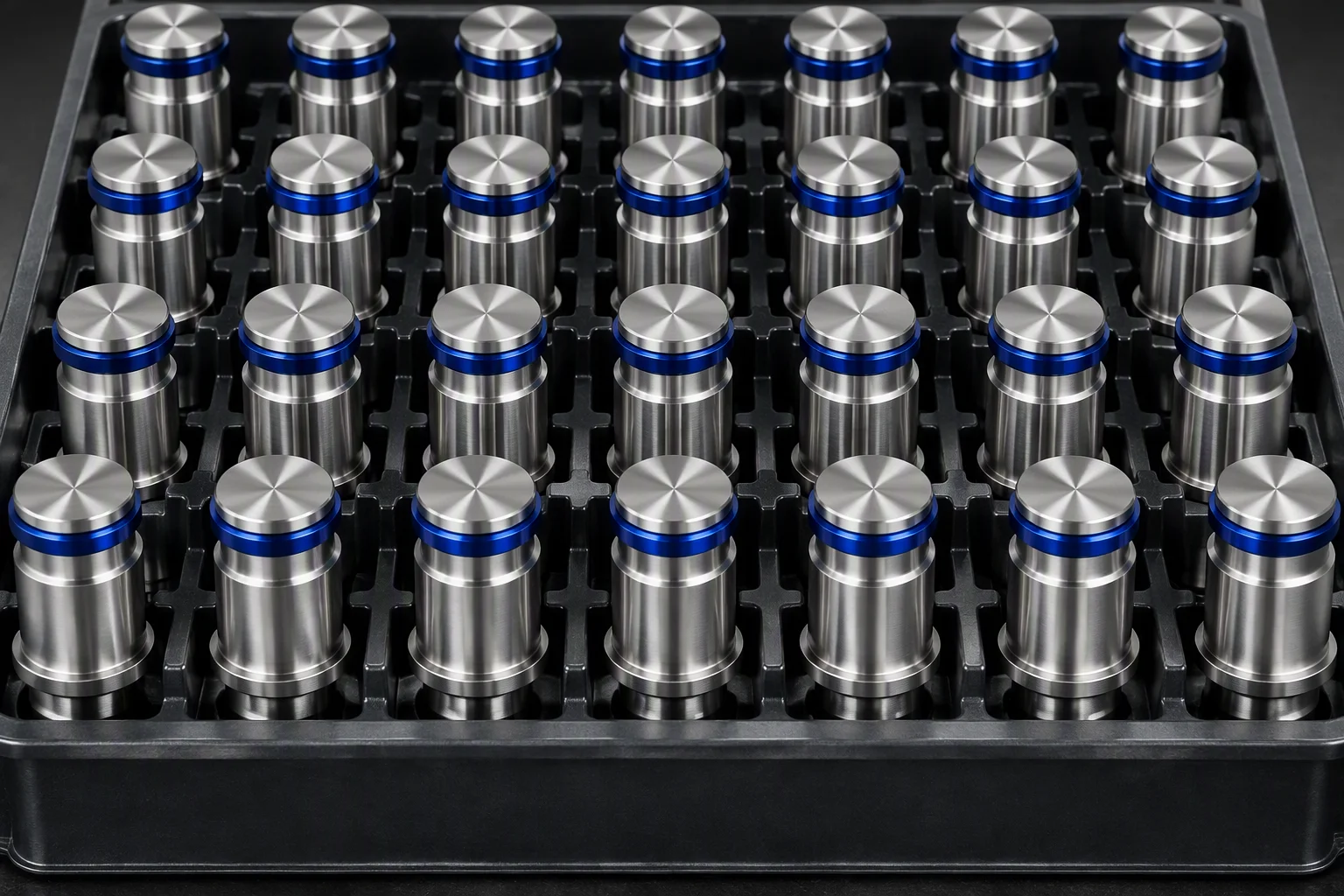
No visible particles. No debris.
Requirement
No visible particles or debris on the delivered part. per the OCP UQD specification
Check
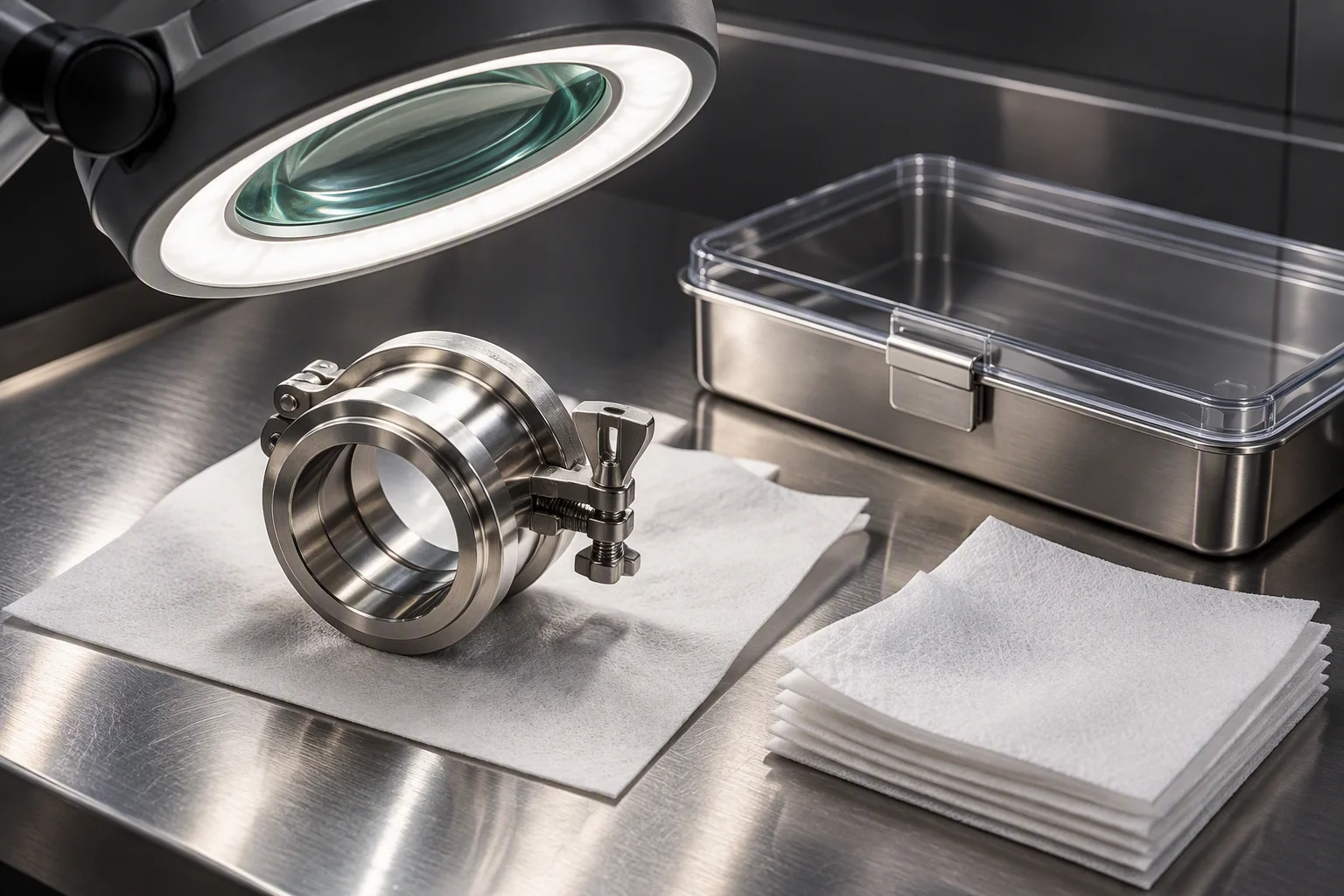
Visual inspection of the delivered surface, filed alongside the per-batch cleanliness report. process capability
Upstream
Two gates sit ahead of this one: pressure on welding & fabrication, leak-rate bands on quality. Neither set of numbers is repeated here.
The unit that goes on the report
sccm · both unit systems accepted
Unit
Leak rate is reported in sccm: standard cubic centimetres per minute, the unit this product class is written in.
Anchor
1 sccm ≈ 1.69×10⁻³ atm·cc/sec.
Two systems
Reports are accepted in sccm or in atm·cc/sec; the conversion is re-checked line by line when the report is reviewed.
Verdict rule
A pass with no unit and no test condition attached is not accepted as data, whichever system it arrives in.
Bands elsewhere
Acceptance bands and instrument sensitivity are set on quality and on the helium leak testing note. This page fixes the unit only.
How long the clean state has to hold
Shelf life · service life · held by
Shelf life
15 years in the unopened pack. per the OCP UQD specification
Service life
10 years in service. per the OCP UQD specification
Held by
Storage condition plus the packing barrier. Opening the pack or pulling a dust cap leaves that condition, and the clock changes meaning. process capability
What holds the clean state in transit
Barrier layers · packing options · destination spec
Dust caps
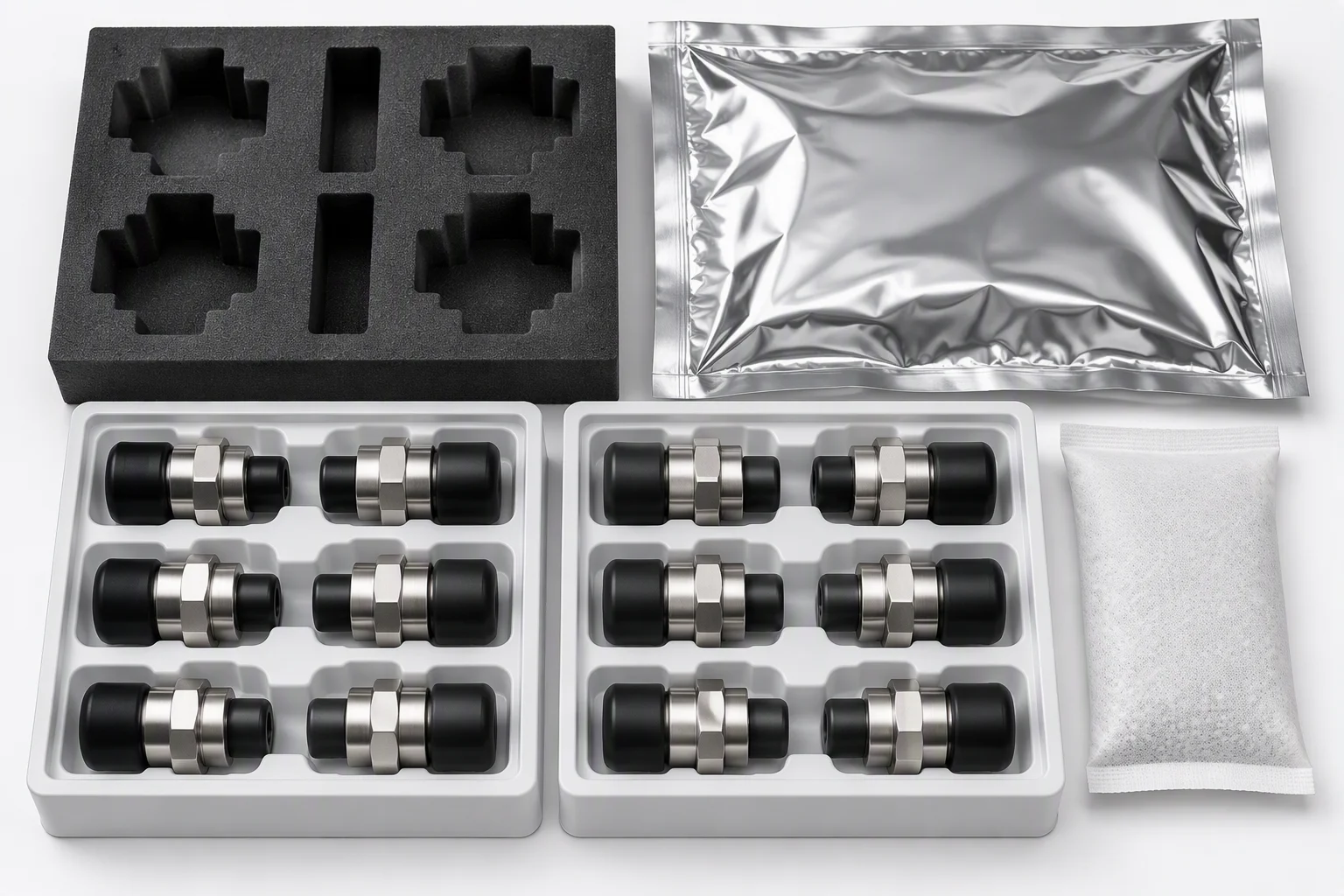
End caps on both ends of every part, so the sealing face never meets the air of the pack. industry practice
Clean packing
Cleanliness-compatible packing plus a laser traceability mark. industry practice
Barrier options
Barrier bag and desiccant selected per destination and per transit time. industry-typical
Packaging spec
Packing specification is agreed per destination order. One global packing specification is not offered.
Shelf anchor
What the packing has to protect is the 15-year shelf life. per the OCP UQD specification



Spec sheet request
What will you check on arrival?
Three things decide acceptance: a cleanliness report per batch, the ISO 16232 / VDA 19.1 / ISO 4406 set it is issued against (industry practice), and a packing specification agreed per destination.
Request the cleanliness spec sheet One business day · English quote + a one-page spec sheet