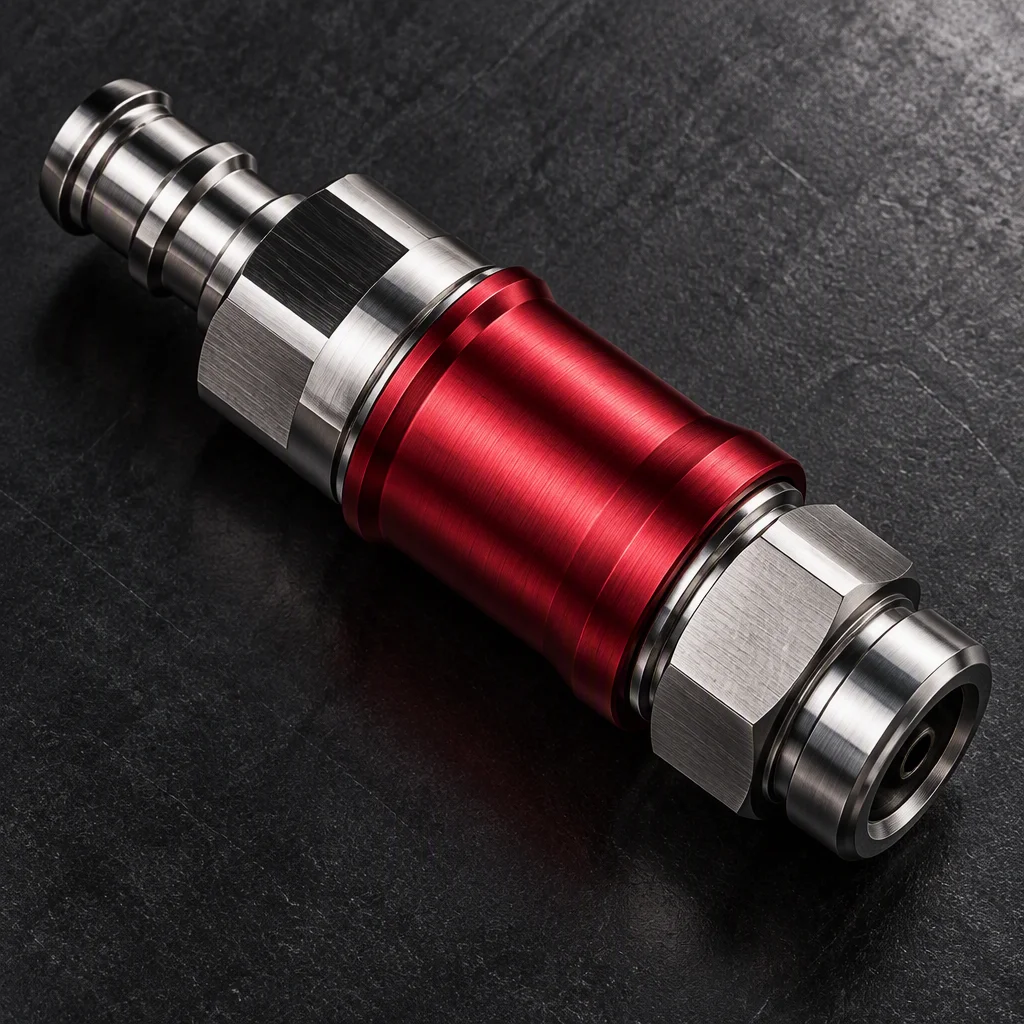
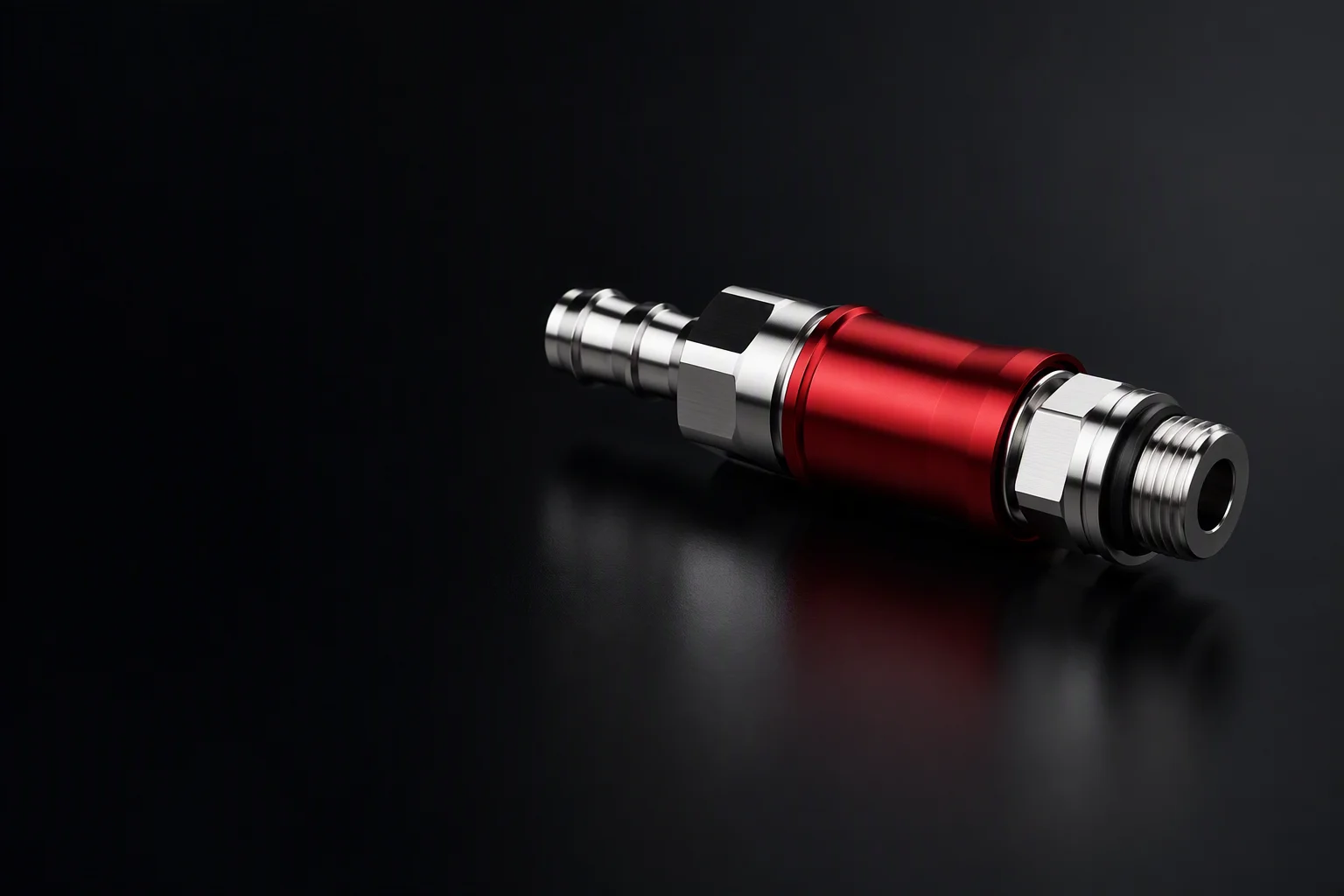
UQD04 · 1/4 inch · CPU + GPU cold plate loops
UQD04 (1/4") Quick Disconnects
for Cold Plate Loops
The bore the cold-plate loop is built around: one quarter inch, a two-part end, and two numbers that decide whether the part fits the tray and how long it sits on the shelf.
Request spec sheetOne bore carries the tray loop
Cold-plate loops for CPU and GPU trays are the application this bore is sized for (industry guide). The compact body suits 1U and 2U node trays, and the 17–65 °C operating window is a specification requirement rather than a commercial range (per OCP UQD specification).
Two ends: barbed, and threaded
Termination · per OCP UQD specification
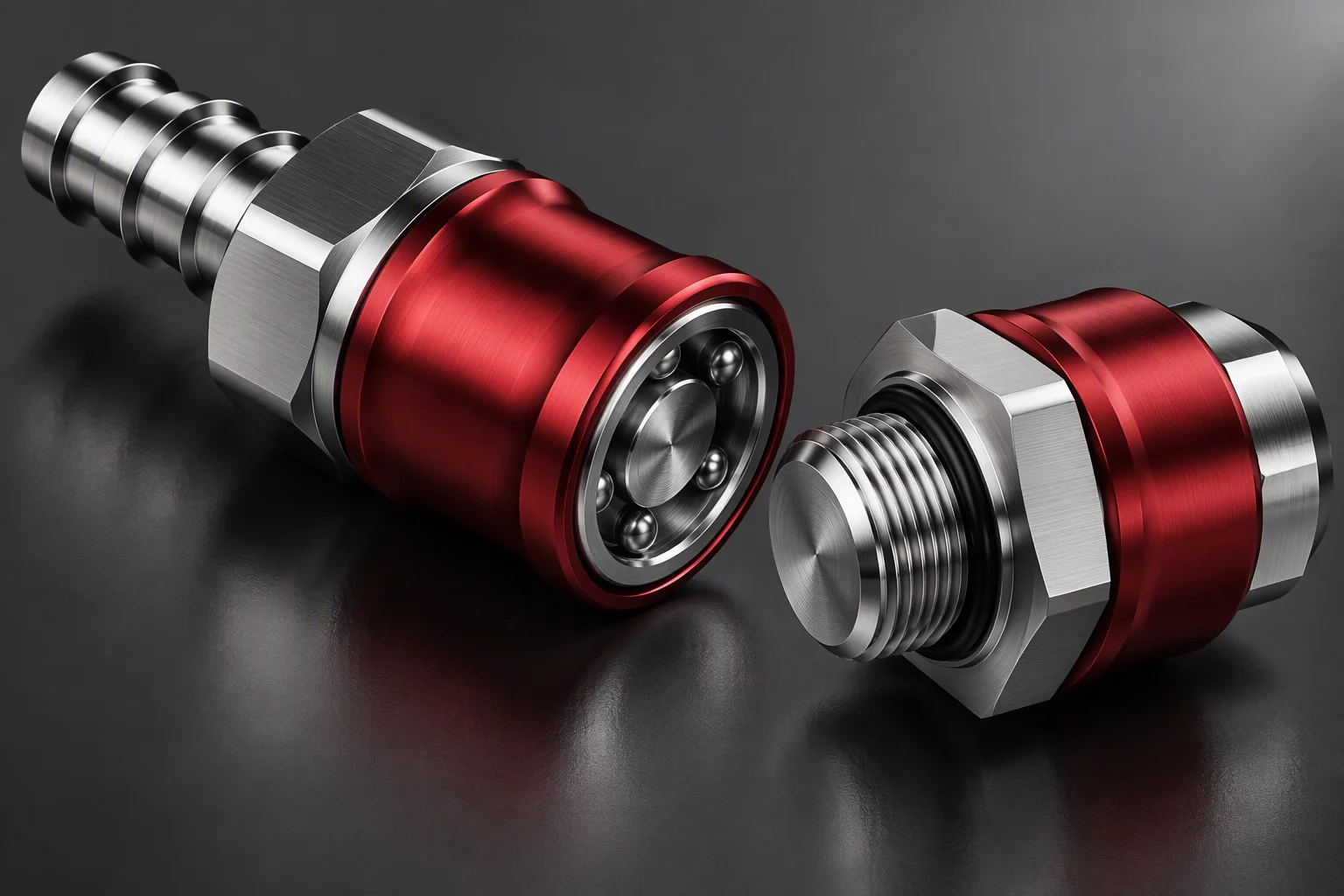
Left: barbed hose shank. Right: ORB flange thread. Neither side carries text inside the drawing.
Body and seal, stated as values
Material & seal · industry practice
-
Body material. Peer UQD04 / UQDB04-class parts use 304 stainless bodies (industry practice). Grade and finish are stated on the drawing rather than in a marketing line.
-
Seal family. The specification's hose side names reinforced EPDM, which matches inhibited-glycol service (per OCP UQD specification).
-
Seal compound, per site. Coolant chemistry differs between sites, so the elastomer is selected against the fluid you actually run. Send the fluid data sheet with the enquiry and the seal is picked from that, not from a default.
Shelf life, service life, spares
Specification requirement
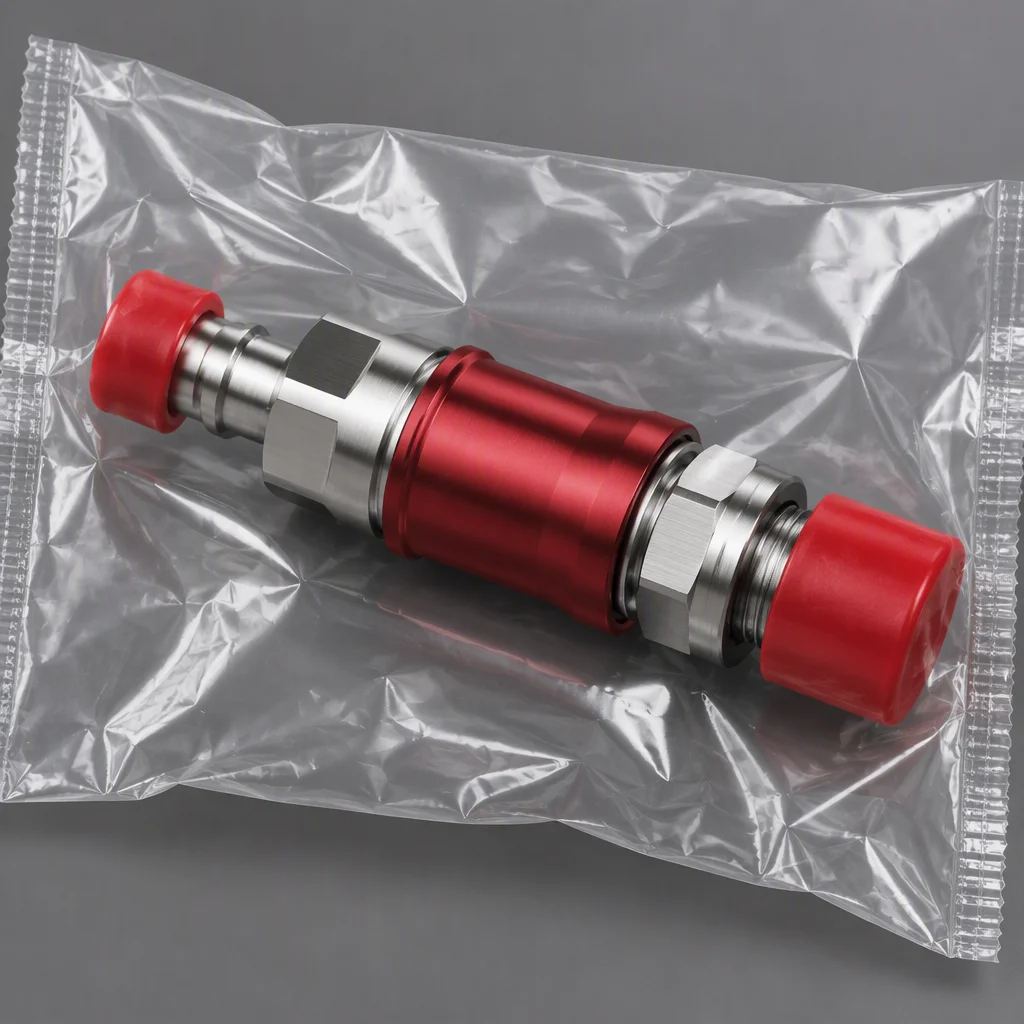
Upper rule: shelf life. Lower rule: service life. The marked end is the 15-year limit; every value is overlaid as mono, none of it drawn inside the figure.
Spares are planned against the service interval: a spare that has sat past its shelf life is a spare you replace rather than fit.
Four states to confirm before you order
Scale · seal face · the pair apart · through the tray backplate
The bore, the face, the pair, the plate
-
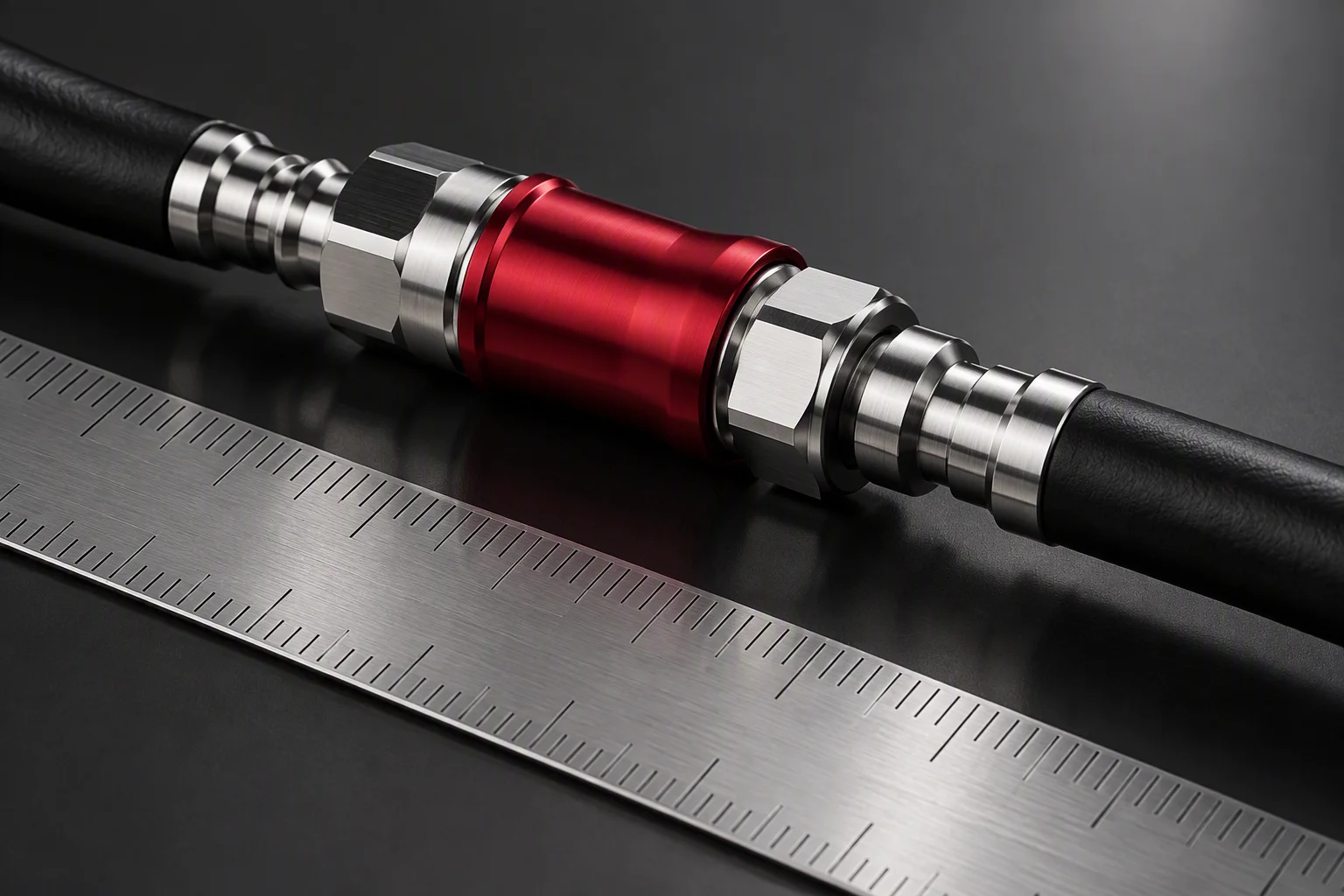 ScaleThe pair against a steel rule — does it fit the tray pocket
 -
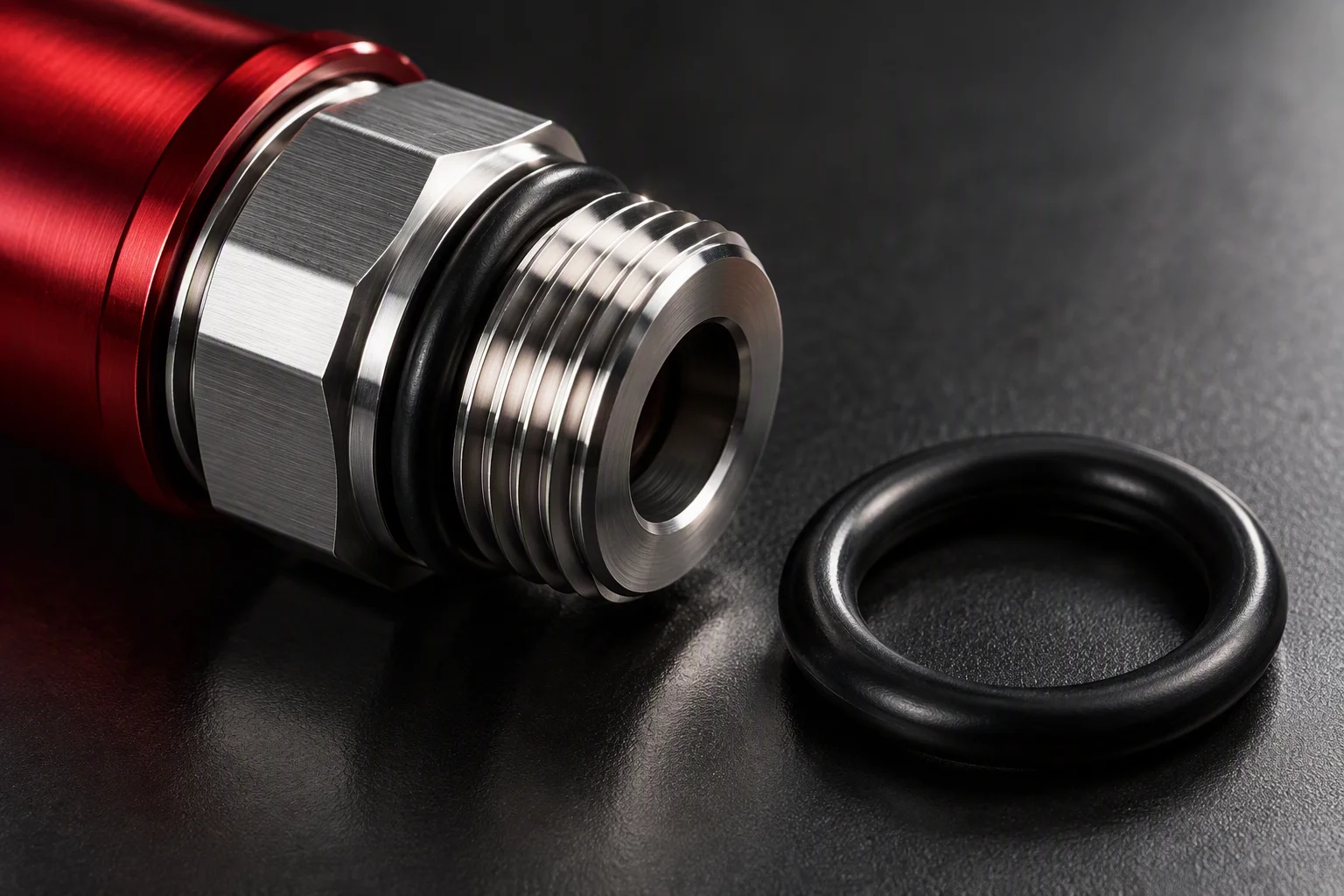 Seal faceORB thread crests and the gasket beside them
 -
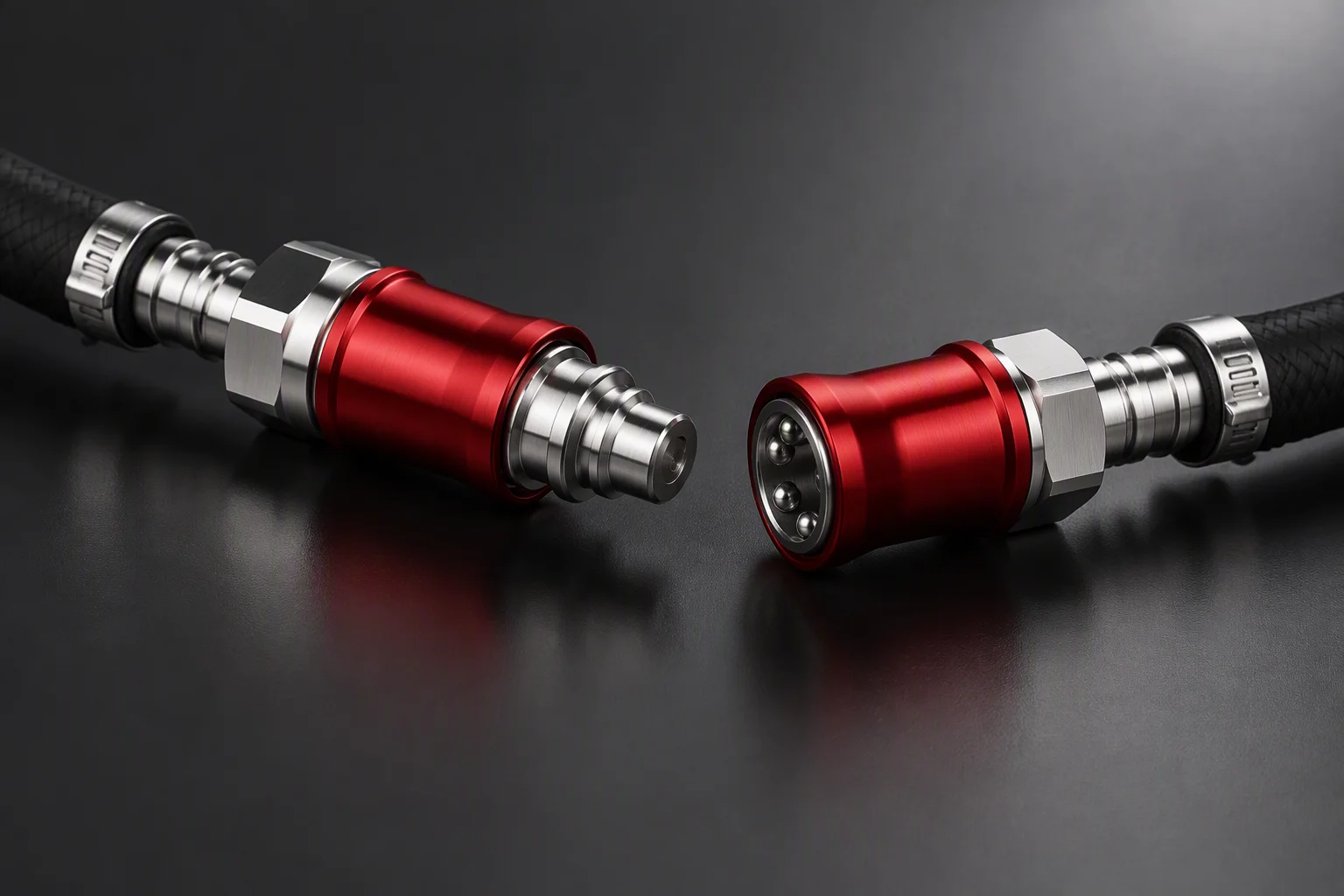 ApartWhat the maintenance action looks like
 -
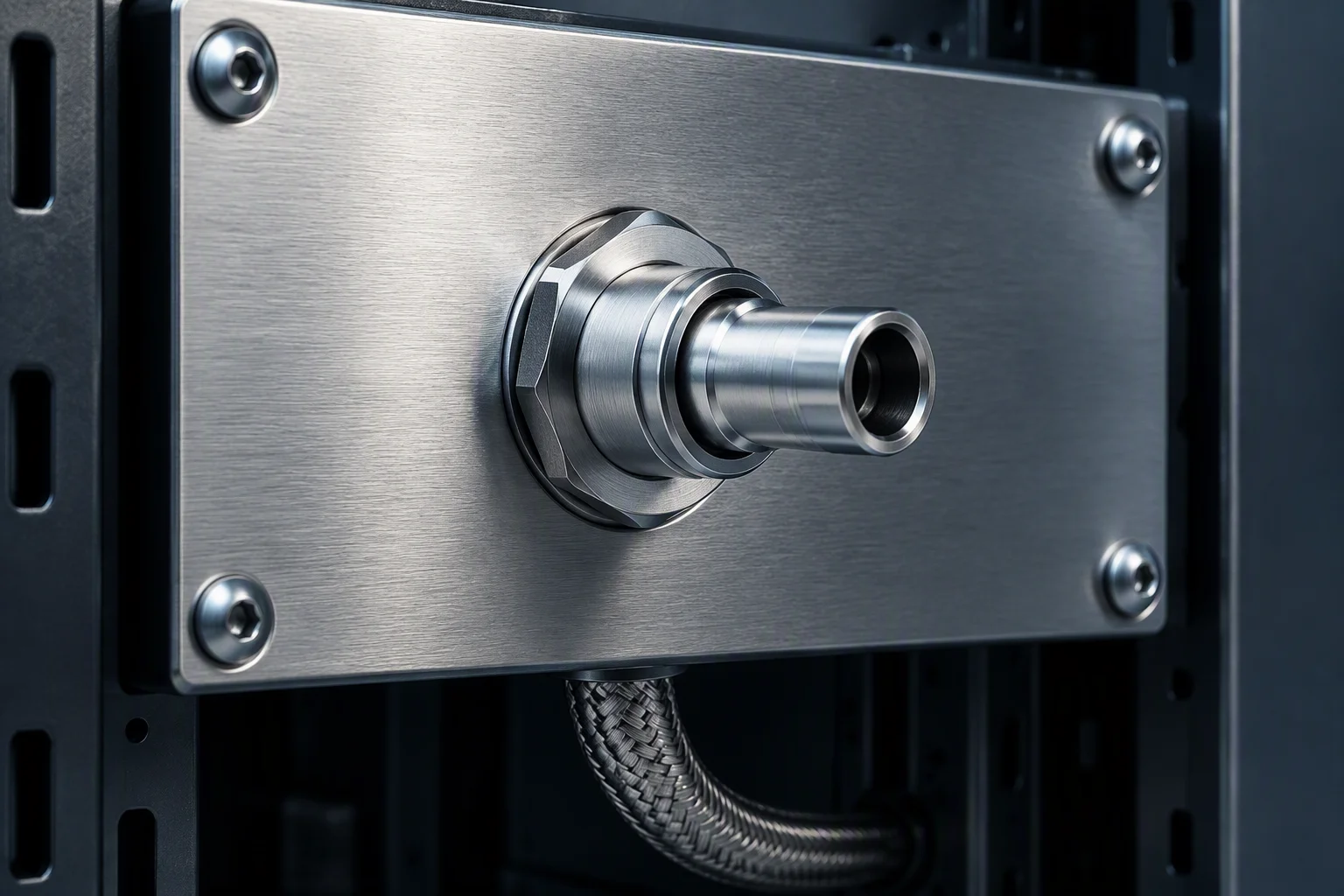 At the plateA socket through the tray backplate
 -
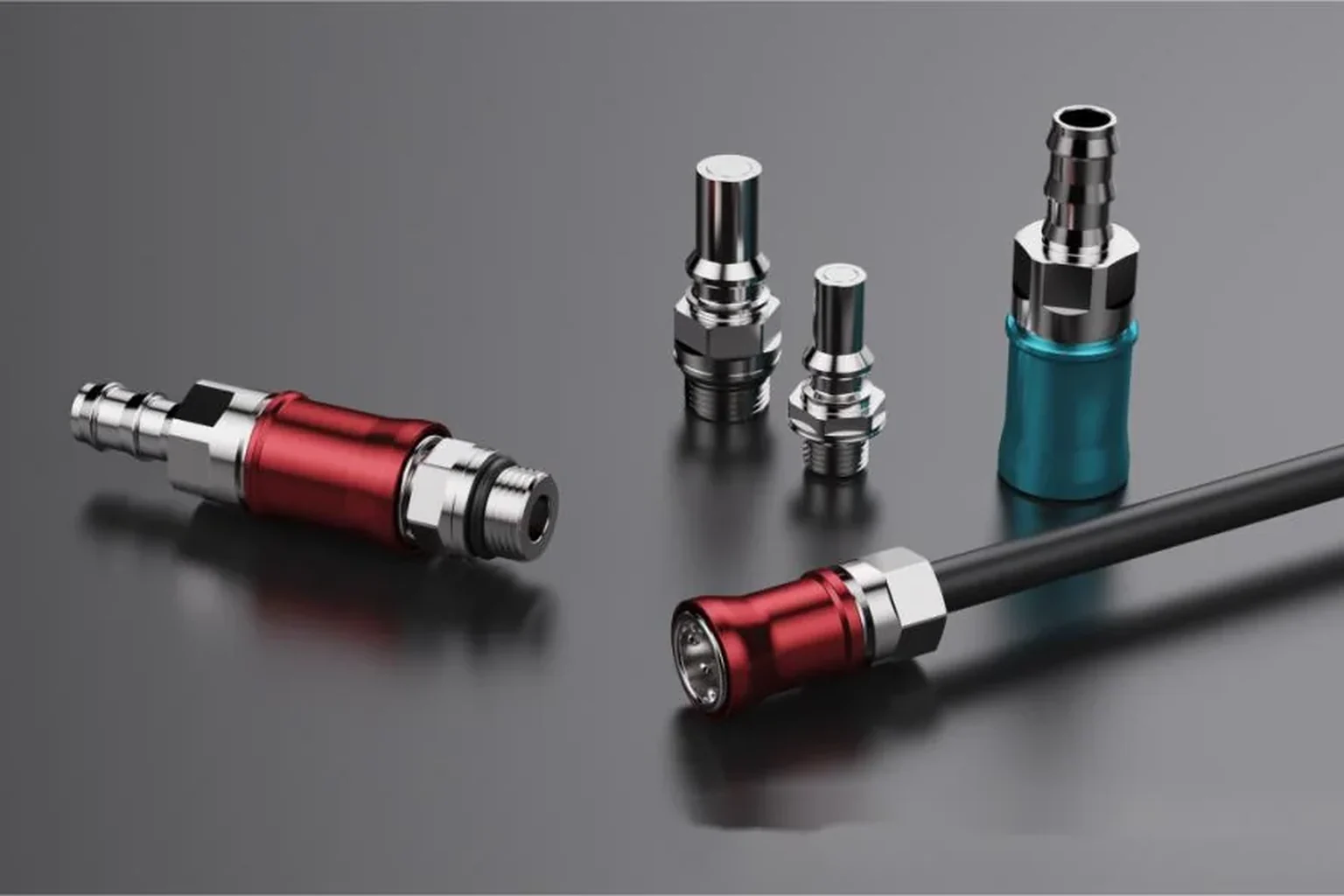
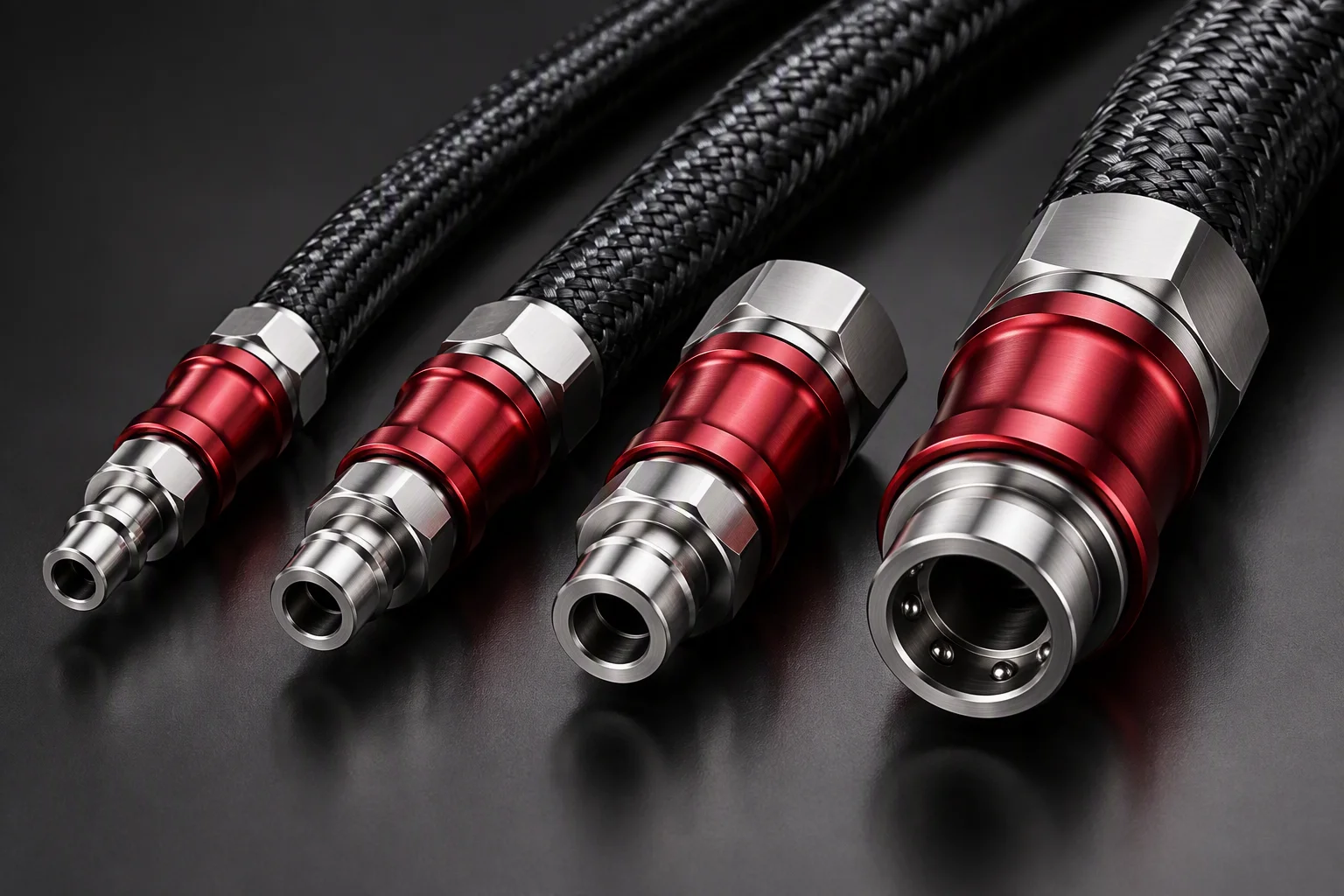 Position in the familyFour bores ascending — this one is second
 -
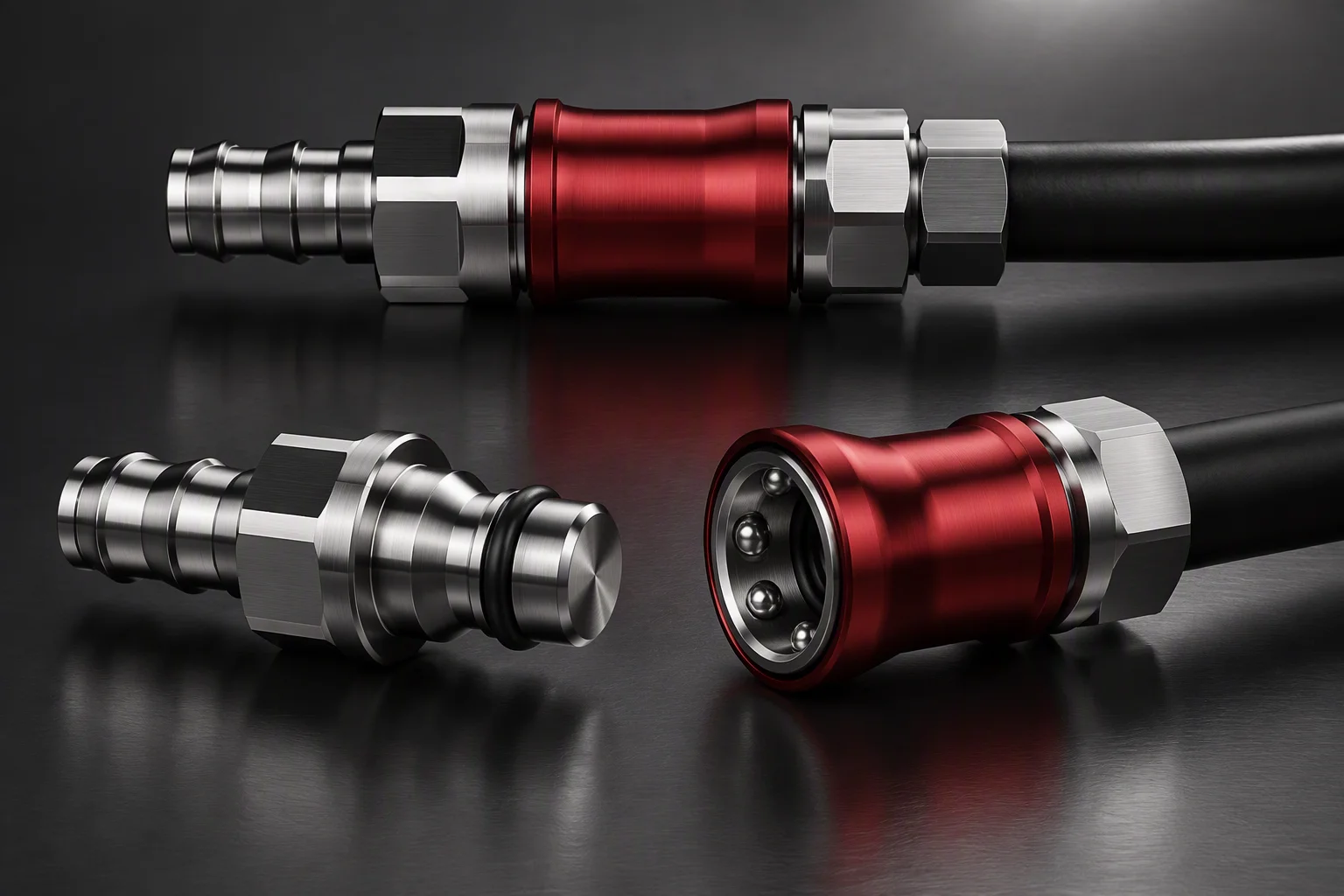 Mated and apartBoth states of one pair, same frame
Family extremes and the dry-break stack
-
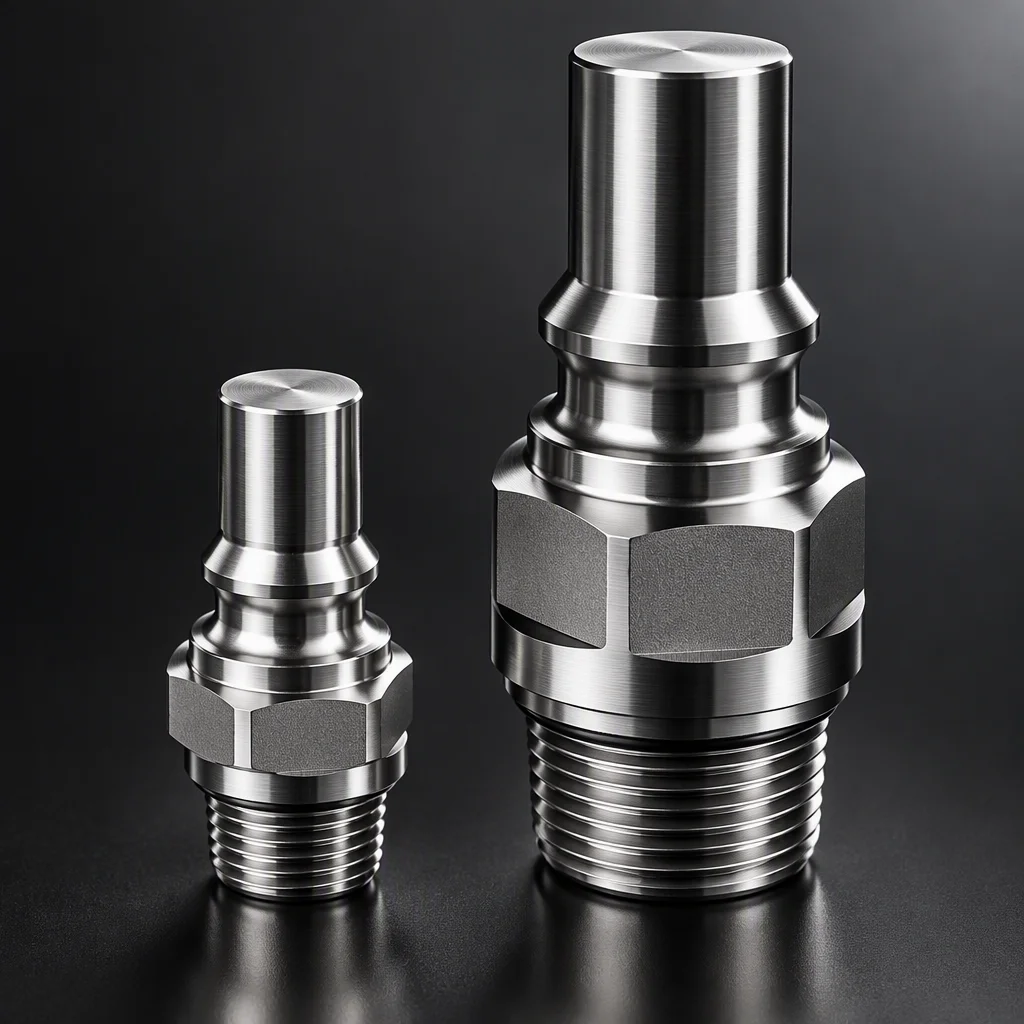 Family extremesThis bore against the two ends of the ladder
 -
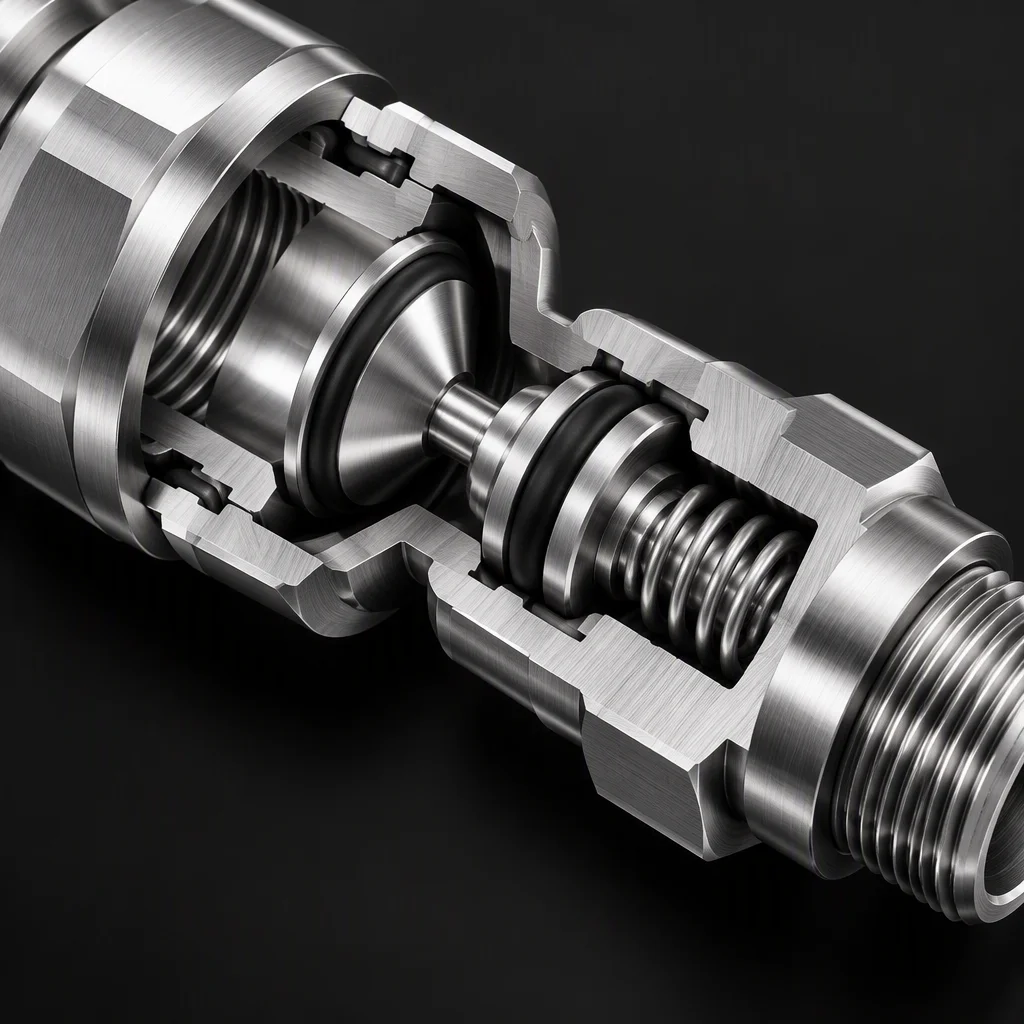 Dry-break stackThe valve that makes the loss figure possible
In the rack, and where the body starts
-
 Rack sideA rack face with couplings and hose
 -
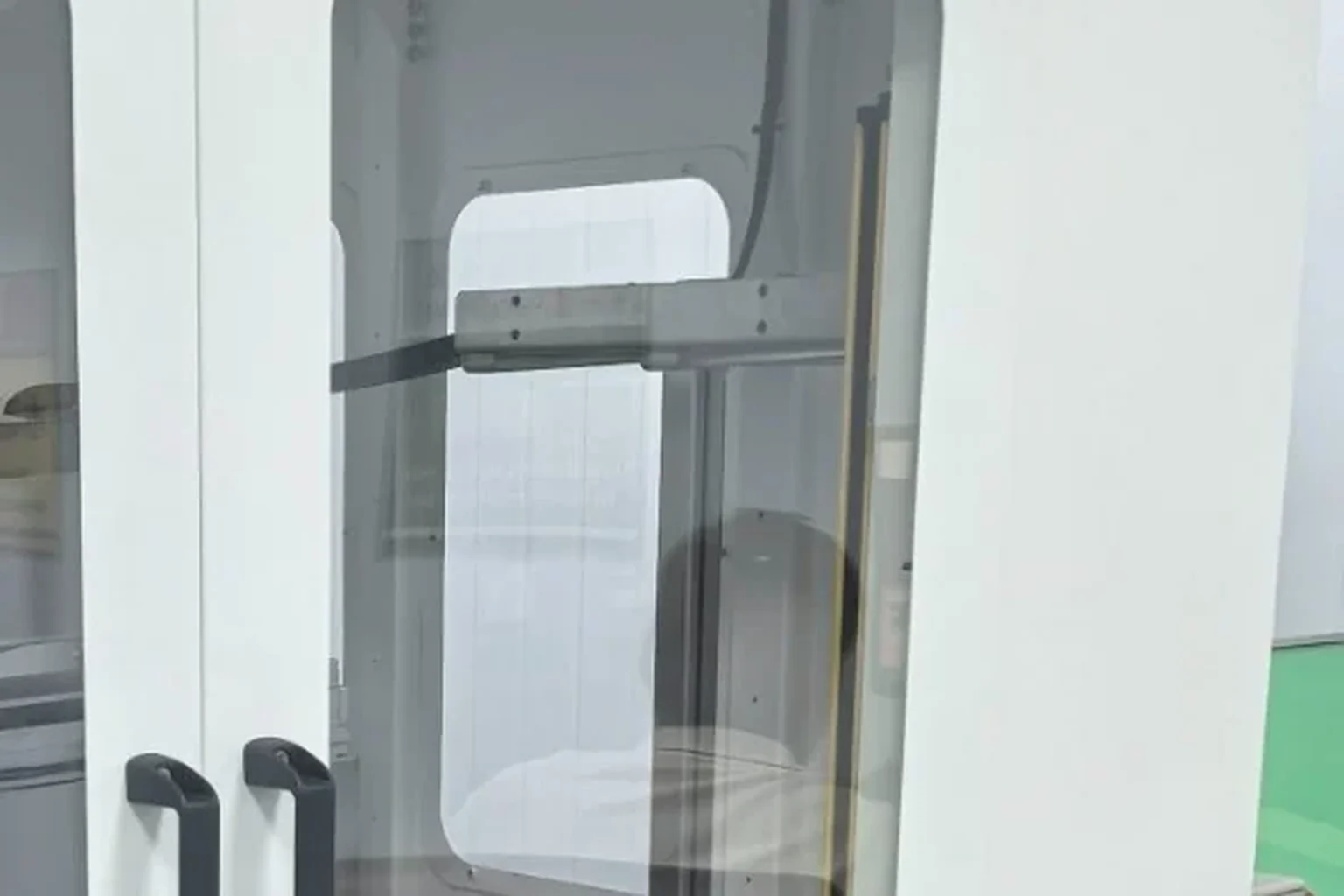 Machine enclosureGlazed doors on the shop floor

Hose size and thread series.
That is all we need.
Send the hose bore and the ORB series (ISO 11926-3). One business day brings an English quote, a one-page spec sheet, and free samples for a cross-brand pairing check.